
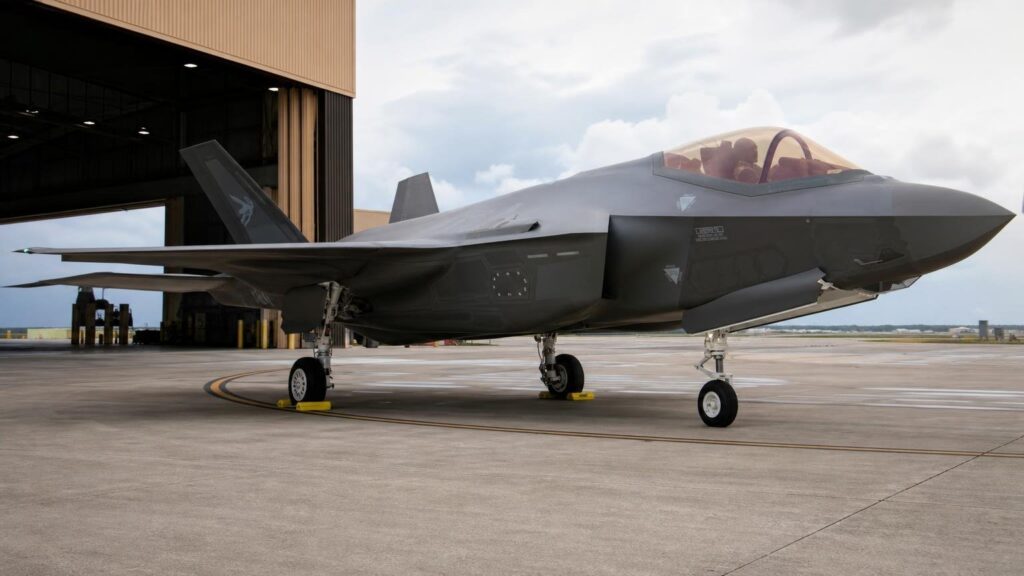
The most feared weapon in modern air warfare may never fire a shot. In the hands of the Royal Australian Air Force, one sleek jet can silence sensors, scramble networks, and rewrite the electromagnetic map of a battlespace. It is the EA‑18G Growler, a twin‑seat electronic‑attack aircraft that turns hostile emitters into so much static.
The jet that fights with electricity
At its core, the Growler is a Super Hornet reimagined for electronic dominance. Beneath its familiar airframe lies a web of receivers, processors, and pods that sense, target, and overwhelm radars. Wingtip ALQ‑218 receivers sniff for faint signals, building a live threat picture in microseconds. Underwing pods project tailored jamming, carving safe corridors for friendly aircraft to move and strike.
“Think of it as a flying mute button for hostile emitters,” is how crews often explain it. With a crew of two, one flies the jet while the other hunts in the spectrum—tasking pods, selecting waveforms, and orchestrating effects in real time.
How it ‘blinds’ a whole network
When people say the Growler can blind a country’s radars, they mean it can degrade an integrated air‑defense system across a wide area. It does this with smart, adaptive jamming that denies, deceives, or delays the enemy’s picture. Deception techniques can create false targets, stretch return ranges, or shift apparent bearings. Denial techniques can saturate receivers with noise, collapse tracking loops, or desynchronize networks.
“It’s not just power, it’s precision,” as one operator likes to say. The jet prioritizes the right emitters at the right time, forcing defenders to choose between turning off their radars or watching them turn useless.
Australia’s unique edge
Outside the United States, only Australia flies this platform today. That exclusivity reflects deep trust, shared training pipelines, and complex exports. The Royal Australian Air Force fields a small but potent fleet, based at RAAF Base Amberley and flown by No. 6 Squadron. Over the past decade, crews have trained alongside U.S. Navy Growlers, refining common tactics and data procedures.
Australia didn’t pursue this to be novel. It pursued it to be credible—to open doors for F‑35A strikes, to protect E‑7A Wedgetail command‑and‑control, and to give Canberra a sovereign option to shape the spectrum in its own right. “When the Growler flies, the rest of the force gets smarter,” is a line you hear often in briefings.
What the jet carries—and why it matters
The Growler’s muscle traditionally comes from ALQ‑99 jamming pods, proven but aging. A leap arrives with the Next Generation Jammer, rolling out in bands to expand range, agility, and raw effect. Mid‑Band brings sweeping coverage against common fire‑control radars, with Low‑Band aimed at long‑range warning systems that anchor national defenses. Layered on top is the AGM‑88 family of anti‑radiation missiles, giving the jet a hard‑kill option when a threat must be removed.
Myths, limits, and counters
Can one squadron switch off an entire continent? Not exactly—and that’s not the point. Effects are geometry‑dependent, time‑bound, and resource‑limited. Adversaries adapt with low‑probability‑of‑intercept radars, passive sensors, networked decoys, and agile waveforms. The Growler answers with faster processing, richer libraries, cooperative tactics, and tight fusion with fifth‑generation jets.
“What wins is not a single button, but a combined plan,” instructors constantly stress. Electronic attack sets conditions; other forces exploit the openings.
A mission in five heartbeats
- Ingress under EMCON, mapping hostile emitters from long range.
- Light up tailored jamming, split across high‑priority threats.
- Launch deception to misplace tracks, then push strike fighters forward.
- Suppress stubborn nodes with AARGM, collapsing an air‑defense sector.
- Egress while re‑scanning the picture, backfilling gaps with remote assets.
Why so few air forces attempt this
Building a top‑tier electronic‑attack ecosystem is hard and costly. It demands guarded intelligence, deep software talent, specialized test ranges, hardened training, and unbroken access to threat‑representative emitters. It also relies on tight alliances—because realistic data and tactics are closely held. Australia invested for years to clear each of those hurdles, and it shows every time the jet checks in.
What it changes in the region
In the Indo‑Pacific, the Growler acts like an equalizer. It blunts the intimidation value of long‑range SAMs, complicates anti‑access plans, and gives coalition air packages options beyond brute force. Paired with F‑35A stealth and E‑7A battle management, it turns the spectrum into a maneuver space, not a fixed constraint. “Deterrence is about credible paths to success,” a planner might note. The Growler makes those paths visible—and to an adversary, much less certain.
The horizon for Australia’s crews
As Next Generation Jammer pods mature, effects will reach farther, adapt faster, and stitch more seamlessly with unmanned teammates and space‑borne sensors. Expect more distributed kill‑chains, more software‑defined tactics, and more emphasis on resilience when the other side jams back. The job stays the same: shape the electromagnetic terrain, so everyone else can fight—and win—on theirs.