
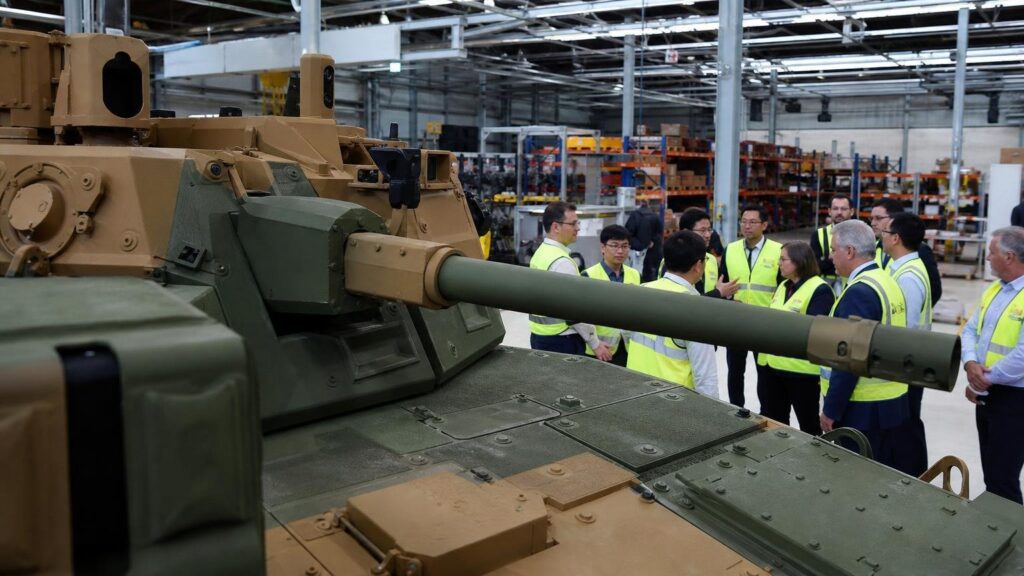
A bold strategic bet has landed on Australia’s southern coast. In a move that signals a new phase in the global defense industry, a leading South Korean manufacturer is setting up its first overseas production line in Geelong, choosing the city over heavyweight contenders in America and Europe. The decision blends geopolitics with industrial logic, positioning Victoria as a launchpad for next‑generation armored vehicles and advanced systems destined for allied forces in the Indo‑Pacific and beyond.
“It’s about speed, certainty, and scale,” said one senior figure familiar with the program. “Geelong gives us a proven manufacturing ecosystem, deep defense talent, and a government that understands time‑critical delivery.”
Why Geelong stood out
Geelong’s appeal is both pragmatic and strategic. The city sits near established logistics routes, close to the Port of Geelong, Avalon Airport, and major road and rail links. It has a strong pipeline of engineers through local universities and TAFE, and a legacy of large‑format vehicle manufacturing that can be rapidly retooled for defense.
For a company seeking resilient, export‑ready capacity, the Australian policy environment also matters. Canberra is channeling significant defense investment, re‑gearing its Army for mobility and deterrence, and actively courting sovereign industrial capability. Victoria, in turn, is offering streamlined approvals, infrastructure support, and a network of small‑to‑medium enterprises ready to slot into tiered supply chains.
“Setting up in the U.S. can invite longer queues and heavier compliance loads,” noted a regional defense analyst. “Europe is crowded and politically complex. Australia gives you speed, access to allied programs, and proximity to the theaters that most need capacity.”
- Fast, predictable approvals and site readiness
- Skilled workforce with automotive‑to‑defense transferability
- Proximity to Indo‑Pacific customers and allied exercises
- Strong state support and university‑industry linkages
- Export pathways that complement U.S. and European production, not compete head‑to‑head
What will roll off the line
The facility near Avalon aims to build and sustain a family of armored platforms, including self‑propelled howitzers with dedicated resupply vehicles, and a modern infantry fighting vehicle selected by Australia for its next brigade upgrades. The production mix is designed for modular scalability, letting lines pivot between domestic orders, export batches, and rapid surge requirements.
On the floor, expect advanced steel and composite fabrication, high‑precision robotic welding, digital thread quality assurance, and instrumented test tracks. Sustainment will be as important as assembly, with lifecycle upgrades, spares, and operator training all co‑located to compress downtime.
“This is not just screwdriver assembly,” a program engineer stressed. “We’re transferring core processes—metallurgy, survivability integration, and software‑defined vehicle architectures—so Australia can build, fix, and upgrade at tempo.”
A new node in allied supply chains
The Geelong plant is meant to be a sovereign‑capable, allied‑connected node in a more distributed network. By placing industrial capacity in Australia, the company and its government partners hedge against shipping disruptions, chokepoints, and single‑country risks. It also makes it easier to participate in regional trials, multinational exercises, and spur‑of‑the‑moment capability insertions.
Allied planners have learned hard lessons about fragile supply chains and the difficulty of scaling munition and vehicle output under pressure. A ready‑to‑go line in the Southern Hemisphere offers second‑source assurance, shared technical standards, and rapid sustainment to deployed units. It also enables closer teaming with Australian SMEs on sensors, EW packages, and mission‑system software, growing exportable sub‑systems that plug into allied fleets.
“This is how you build real resilience,” said a former logistics commander. “Multiple sources, interoperable designs, and factories close to where your forces might actually operate.”
Why not America or Europe
Choosing Australia over the traditional hubs was about timing, access, and complementary capacity. U.S. lines are heavily committed to replenishment and new programs; Europe is likewise saturated as nations backfill stocks and modernize. Australia offers a cleaner slate, fewer overlapping regulatory regimes, and the ability to move from groundbreaking to production with uncommon velocity.
There’s also the matter of export flexibility. While strict controls still apply, companies often find that Australian‑based production and integration can navigate allied frameworks with fewer bottlenecks, particularly for regional customers that train and exercise with the ADF.
Local impact in Geelong
For Geelong, the investment means high‑quality jobs, a boost to precision manufacturing, and a magnet for specialized suppliers. Apprenticeships and graduate intakes will anchor long‑term skills, while research links with Deakin and other partners seed materials, autonomy, and human‑machine teaming projects. The site design leans into energy efficiency, with rooftop solar, smart thermal management, and pathways to lower‑emissions process heat.
“Geelong knows how to build at scale,” a local industry leader said. “This puts that DNA back to work on cutting‑edge equipment, with exports baked into the plan.”
What to watch next
Key markers include the ramp from pilot batches to steady‑state throughput, the localization rate for critical components, and how quickly training pipelines feed shop‑floor roles. Watch for joint trials with the Army, export MOUs with regional partners, and incremental software and protection upgrades landing via spiral development.
The message, however, is already clear. By planting deep industrial roots in Geelong, a South Korean prime is redrawing the map of allied production—not as a detour from America or Europe, but as a strategically placed third pillar built for speed, resilience, and the demands of a more contested decade.