
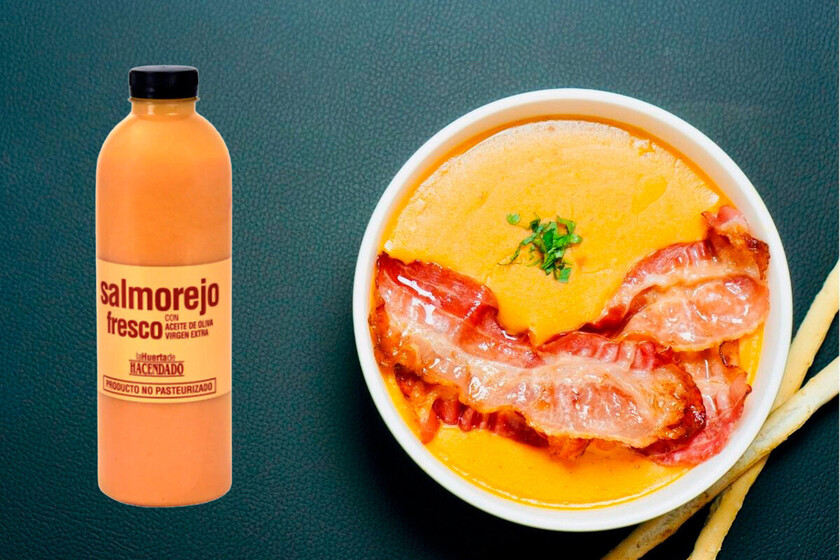
With the heat intensifying, pre-packaged salmorejo has cemented itself as one of the standout staples in the shopping basket. Fresh, quick to serve and ready to consume, it is the alternative to gazpacho for those seeking a light dish without firing up the kitchen.
The OCU has analysed 30 refrigerated salmorejos, and the verdict is clear: store brands outshine premium options.
Who leads the rankings?
Hacendado, Mercadona’s brand, tops the list with 70 points and a rating of good quality, making it the best-valued product in the analysis. Very close are two references from Alvalle, each with 69 points and also distinguished as good quality. The leading group is completed by La Huerta de Don Simón, reaching 68 points.
According to the OCU, the best-valued products share one trait: they stick to the traditional recipe and avoid ingredients such as red pepper, onion, or vinegar, which disrupt the classic salmorejo profile. All of them offer a creamy texture and a balanced flavour, and several rank among the study’s best value-for-money options.
Moreover, some of the best-rated varieties cost around €3 per litre, while considerably more expensive options do not achieve a similar score in tasting. Paying more does not guarantee better taste.
And at the bottom of the rankings?
Santa Teresa, with its Raf tomato version, closes the classification with 47 points. They are followed by DIA Al Punto (48), Lidl Chef Select and Froiz Raf, each with 49 points. All four receive a poor quality rating in the professional tasting.
The explanation, according to the organization, is that the worst scores correspond to recipes that stray from traditional preparation by incorporating onion, pepper, or vinegar, in addition to flavor imbalances or a texture that falls short. In fact, according to Infobae, 23 of the 30 salmorejos analyzed failed the tasting. Almost all of them.
Some, according to tasters, have so many added ingredients that they look more like gazpacho than salmorejo. The OCU notes this in its report: in several product entries it is mentioned that they would be described as gazpacho, not salmorejo.
The price data is telling. The differences are striking. The cheapest salmorejo in the analysis is Eroski, at €2.11 per litre, while the most expensive is Santa Teresa Raf, reaching a remarkable €8.16 per litre, according to Diario Vasco. The organization highlights a detail to consider when filling the cart: the brik format often offers a better value-for-money than clear glass bottles.
Nutrition in its favor. On the nutritional front, there are hardly any meaningful differences among brands. All the salmorejos analyzed earn a good or very good rating thanks to a composition based on tomato, olive oil, garlic, and bread, with a general absence of additives. Their caloric contribution is even lower than many homemade recipes due to using less bread and, in some cases, less oil.
As they are made with peeled and filtered tomatoes, these products typically contain less fiber than a homemade salmorejo. But in return, the OCU does not detect industrial ingredients in any of the 30 references analyzed. They are by no means ultra-processed foods, according to Crónica Global.
Labeling could improve. The organization notes that in some packages there is missing information about the exact percentage of key ingredients, or even a clear way to contact the manufacturer. Aspects that are noticeable when comparing products.
Photos | From Pexels: photo by Ivan Vi, Santa Teresa, and OCU
In Trendencias | Javier Bardem, 57, on his children with Penélope Cruz: “In our house there is something non-negotiable, that at least one of the two must always be with them”
In Xataka | Today at Lidl, the answer to outlets hidden under the sofa or furniture to charge several devices at once