
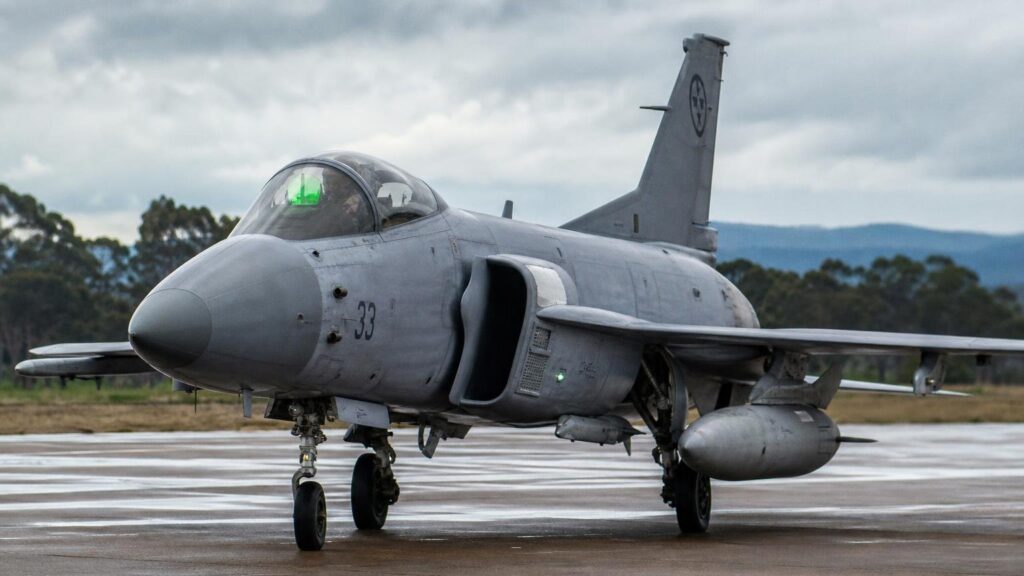
They were meant to fade into museums and memory. Instead, a batch of aging delta-wing jets that Australia offloaded for pennies in 1990 still slice across distant skies, dropping ordnance and pulling G in real wars. The story is a reminder that in airpower, the line between “obsolete” and indispensable is often drawn by budgets, ingenuity, and the will to adapt.
“Old airplanes don’t die,” goes the line, “they just get new wiring.” In this case, they also got new missions—and a second life far from the bases where they once wore kangaroo roundels.
The bargain nobody saw coming
By the late 1980s, Australia’s Mirage III fleet was tired. The Royal Australian Air Force had moved on to Hornets, and rows of deltas sat like sun-bleached knives awaiting their fate. Disposal was practical: free up space, recover a bit of cash, and move on with a modern fleet.
What followed was a quiet transfer that looked routine and cheap. Airframes, spares, and tooling changed hands for something close to the price of scrap. On paper, it was a footnote—a tidy exit for a workhorse that had served its era.
Yet the buyer saw more than surplus metal. In those crates and fuselages lay a blueprint for an affordable path to power, one that valued mechanics’ skill as much as accountants’ sign-off.
From storage racks to the sharp end
The receiving air force didn’t just fly the jets; it rebuilt them. Over several phases, technicians stripped deltas to the ribs, refitted wiring looms, inspected every rivet, and brought them back with modern avionics. New radars, updated mission computers, fresh cockpits, and precision-attack gear turned museum pieces into midlife fighters.
This wasn’t magic; it was methodical, industrial craft. Local depots mastered overhauls, engines were refreshed, and supply lines were rethreaded around stocks bought for next-to-nothing. The result was a jet that kept the Mirage’s soul—speed, climb, and that unmistakable delta silhouette—while gaining 21st-century awareness.
Pilots discovered that with the right sensors and weapons, a fast, stable delta could still hit hard, especially at night. “Give me a reliable radar, a decent pod, and I’ll make it work,” one might say of the philosophy behind the upgrade wave.
War proves what balance sheets can’t
Then came the missions. Counterinsurgency operations demanded precise strikes against elusive targets, often in rugged terrain where loiter time and responsiveness mattered more than brochure speeds. The upgraded deltas flew regularly, hauling guided munitions, returning with clear footage, and building a combat rhythm that accountants can’t price.
Intermittent crises on tense borders added the crackle of air-to-air stakes. Suddenly those old wings, tasked with intercepts and patrols, were part of deterrence equations and headline moments. The same jets once consigned to disposal sheets were now on alert, their crews swapping maintenance tags for sortie logs.
“Obsolescence isn’t a date,” the saying goes, “it’s a context.” In the right command environment, a rugged airframe with modern aids stays relevant far beyond its original sell-by.
Why the delta still bites
There’s a reason the design endures. The Mirage’s slender delta offers blistering acceleration, sky-scraping climb, and rock-solid supersonic behavior. It’s simple to service, relatively compact to shelter, and forgiving where it counts—fuel, runway, and maintenance hours per sortie.
Add contemporary missiles, a decent radar, and a targeting pod, and you have a platform that can defend airspace and drop precision weapons with credible effect. No, it won’t beat a top-tier stealth fighter in a sterile contest, but wars aren’t sterile and budgets aren’t infinite.
That calculus—good enough, in numbers, with people who know how to fix and fly—keeps yesterday’s fighters in today’s orders.
The quiet lessons policymakers keep relearning
What happened to those bargain-bin deltas is a masterclass in lifecycle economics. Procurement dazzles with glossy jets and rhetoric; sustainment wins wars with parts bins and patience. For nations that can’t buy gold-plated fleets every decade, the upgrade path is less a compromise than a strategy.
- Buy smart, upgrade smarter: acquire airframes at low cost, invest in local overhaul and avionics, and squeeze decades of utility from proven steel.
It also underscores the value of industrial sovereignty. When you can fabricate panels, rewind motors, and integrate sensors without waiting on foreign queues, you control tempo and readiness. Training pipelines strengthen, doctrine evolves to match real capability, and commanders get assets they can actually task—not just admire on delivery day.
In the end, Australia cleared its ramps and balanced its books. Another air arm took those bones and built an airpower bridge. Thirty-odd years later, the deltas are still lifting off at dawn, wings flashing, radios alive with terse callouts. They aren’t relics; they are reminders that in air warfare, ingenuity turns “surplus” into strategy—and that “pocket change” can buy a surprisingly long reach.