
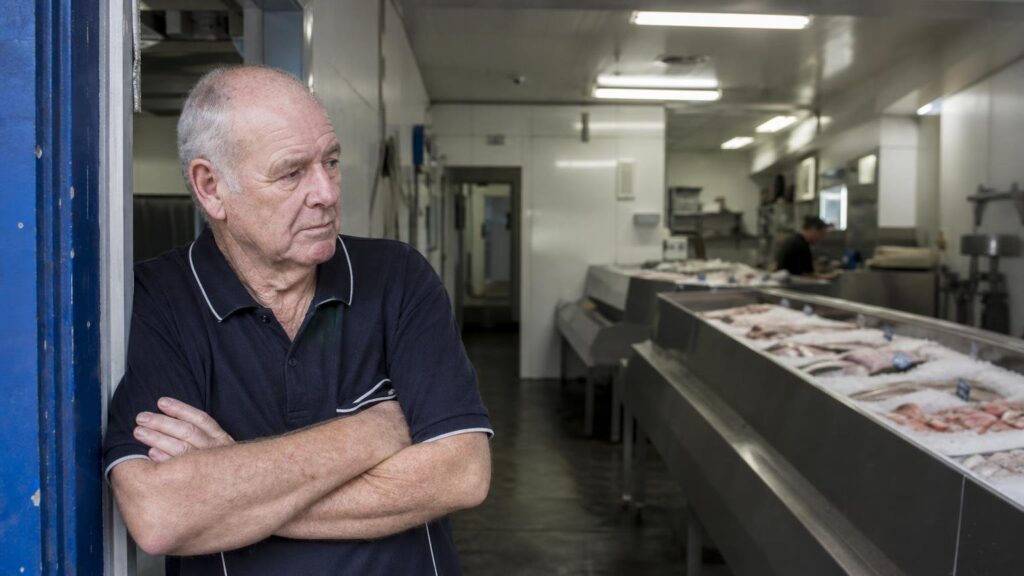
The shutters came down on a quiet afternoon in Fremantle, and a familiar bell rang for the last time. For nearly four decades, a small family shop turned the catch of dawn into the ritual of a neighborhood. Then, as if someone cut the engine, the rhythm that had seemed permanent simply fell still.
Salt, scales, and a city’s ritual
The place was never just about fish; it was about trust, about the quick exchange of glances that said, “This is fresh.” Customers learned the week by the shine of the fillets and the snap in a tail.
People came for a piece of ocean and left with a bit of home. “We knew your order before you spoke,” the owner said, wiping her hands on a faded apron. “Some weeks we knew it before you did.”
Local kids grew into adults who brought their own children, teaching them how to ask for flathead or how to pick a firm flesh. “It felt like you were buying something you could trust,” one regular said. “Not just a meal, but a promise.”
The economics of goodbye
Behind the glass and the easy banter, numbers were tightening like a net in winter. Fuel crept up, ice cost more, and the margin between dawn and dinner got thin.
“Fish didn’t stop coming,” the owner said, “but the costs kept rising.” Foot traffic slowed on certain days, and casual customers turned to big-box bargains. Even reliable seasons felt slightly off.
There was no loud last straw. Just a series of quiet additions, weeks when the receipts didn’t quite balance, and mornings when a 4 a.m. alarm felt heavier than the day’s catch. “We thought we had one more summer,” she said. “Then, suddenly, we didn’t.”
Hands that knew the tides
A shop like this runs on hands—nicked, steady, and sure of the knife’s weight. Those hands knew how to feel for a hidden bone, how to save the sweetest slice of belly for a longtime customer.
They also knew when tired becomes something you can no longer mask. “I could fillet with my eyes closed,” the owner’s partner joked, “but I can’t outpace the years.”
Still, the craft never became routine. Each fish had its own story, and each order had a whispered context—tonight’s birthday, tomorrow’s unexpected guests, next week’s quiet grief.
What a small shop can hold
When a door like this finally locks, it doesn’t close on just a line of products. It closes on a map of tiny rituals, each one a stitch in the town’s fabric.
- The smell of crushed ice and lemon on a knife
- The chalkboard’s daily shrug of tide and price changes
- Paper wrapping that warmed to the palms on the walk home
- The end-of-day laugh that echoed against tiled walls
“These are the things you can’t put on a spreadsheet,” said a longtime supplier. “You count them with your ears, with your nose, with your memory.”
The last day in the cold room
There were no TV cameras, no ribbon to cut, only a few hugs between people who had shared far more than recipes. Someone brought flowers, which felt strange in a room that usually smelled of the Indian Ocean.
They sold what was left, as if serving a wake where the guest of honor was a series of small glories: snapper that crackled in a pan, octopus braised until it turned to silk, prawns that made a Friday night feel lavish.
“Thirty-eight years is a long walk,” the owner murmured. “You don’t notice the distance until you turn around and see the trail.”
What remains after the counter empties
The town will keep eating fish, of course, but it will buy it with different hands, at different hours, from people who may not know the name of your dog. The streets will still smell like salt, but a certain note—a chord only a small shop could strike—will be a little quieter.
And yet, not everything is gone. The skills they taught will live in someone’s kitchen. The habits they shaped will echo through other markets. The first time a grandkid asks for the “usual,” a little piece of this place will flare back to life.
“We didn’t leave empty,” the owner said. “We left with stories—and a city full of palates we helped to train.”
On the final afternoon, the bell rang once more, not for a sale, but for a friendly goodbye. A child pressed his face to the glass and waved, as if the fish might wave back. The light slipped over the tiles, the bucket water drained, and a family stood in a room they had turned into a harbor, all these years, for the people who sailed in hungry.