
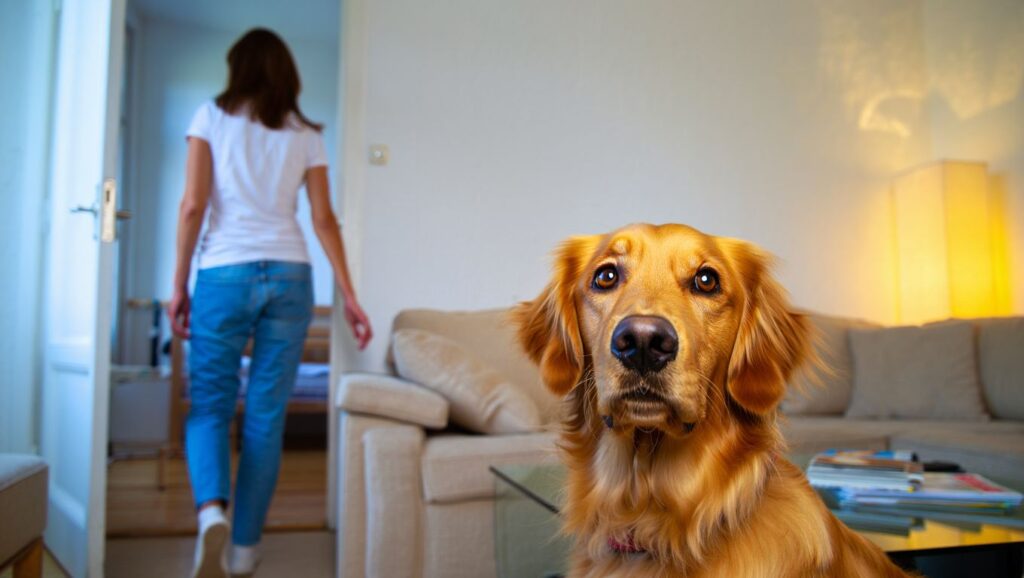
Your dog shadows your steps for a reason, and that reason is often kinder and simpler than you might think. This everyday ritual is a window into your dog’s mind, broadcasting needs, habits, and emotions in plain sight. “Closeness is a strategy, not a mystery,” as trainers like to say, and your pup’s gentle pursuit is full of clues.
Some dogs are velcro-soft, some are purposeful, and some are just plain curious. But nearly all are communicators, using distance and movement to say, “I’m here, are you with me?” Once you learn to listen, the message becomes clear, and the bond grows easier.
Attachment speaks louder than words
Your dog’s steady presence is often about attachment. To a social species, proximity equals safety. Many dogs practice “social referencing,” watching your behavior to decide how to act. If you move, they move; if you settle, they exhale.
“Attachment isn’t clinginess, it’s confidence borrowed from you,” as one behaviorist puts it. In that sense, your shadowing pup is saying, “You’re my anchor.”
Is it love or anxiety?
There’s a spectrum. At one end is warm bonding; at the other, separation anxiety. The difference is in the recovery. If you leave and your dog paces, drools, or vocalizes, that’s a red flag. If they snooze after a minute and cope well, it’s likely secure attachment.
Ask yourself: Does the behavior spike when routines shift? Do exits trigger panic, or just mild interest? Calm shadowing that ebbs and flows is typically healthy.
The reinforcement you don’t notice
Often, we teach this habit without meaning to. You walk to the kitchen, and a snack appears. You head to the door, and a walk happens. You go to the sofa, and cuddles begin. Movement predicts goodies, so movement gets followed.
“Behavior that works gets stronger,” is the simplest rule in training. If every step earns access to you, fun, or food, your pup will invest in tracking you.
Breed traits and personal quirks
Some breeds were built to shadow. Herding dogs monitor motion; guardians patrol and protect; retrievers crave teamwork. A clingy lapdog may simply be fulfilling its job description: be near, stay sweet.
Age and temperament matter, too. Adolescents are nosy; seniors may seek assurance as senses fade. Pain, vision loss, or confusion can nudge a dog to stay closer than usual.
Body language: read the subtext
Watch the details. A loose tail, soft eyes, and relaxed ears suggest friendly companionship. Tense posture, pinned ears, or panting without heat hint at stress. Does your dog block your path, lean hard, or stare at doors? That can be controlling or worried behavior.
Use this simple mantra: “Position is a message.” Where they stand, how they breathe, and when they move all signal intent.
What your dog might be asking for
Sometimes the “ask” is practical. They may need a toilet break, water, or a quick check-in. Other times it’s pure boredom: no mental work, no physical outlet, so they follow the only show in town—you.
Consider these quick, gentle tests:
- Offer a short sniffari walk, a five-minute training game, fresh water, or a rest spot near you, then observe if the following fades.
Encouraging healthy independence
You can keep the bond while building space. Create “settle” zones with a comfy bed and a chew that lasts. Reward calm on the bed while you move around. Use gradual distance games: one step away, return and treat; two steps, return and praise.
“Independence is taught, not assumed,” is a useful reminder. Make alone-time predictable, and make reunions low-key.
When proximity is protection
Some dogs escort you as a gentle guard. New noises, visitors, or late hours can switch on their watchfulness. If the body stays loose, it’s sweet vigilance. If they become stiff, vocal, or blocking, teach a friendly “place” cue and reward calm watch from a mat.
Privacy, please: the bathroom bodyguard
Yes, the bathroom buddy is a classic case. Doors mean separation, and tiles echo sounds your dog can’t parse. Offer a stuffed Kong in a nearby spot, close the door a few inches, and return before worry builds. Expand that gap over days, not hours.
When to check with a pro
If following turns into panic, if injuries or illness are suspected, or if you see sudden changes in a senior, talk to your vet. A credentialed behavior professional can map a tailored plan, because “big feelings need support, not just willpower.”
Your dog’s quiet footsteps carry a simple truth: closeness is comfort, and comfort is connection. Meet that message with clear routines, gentle training, and thoughtful enrichment, and you’ll both walk a calmer path—together, but with healthy space.