
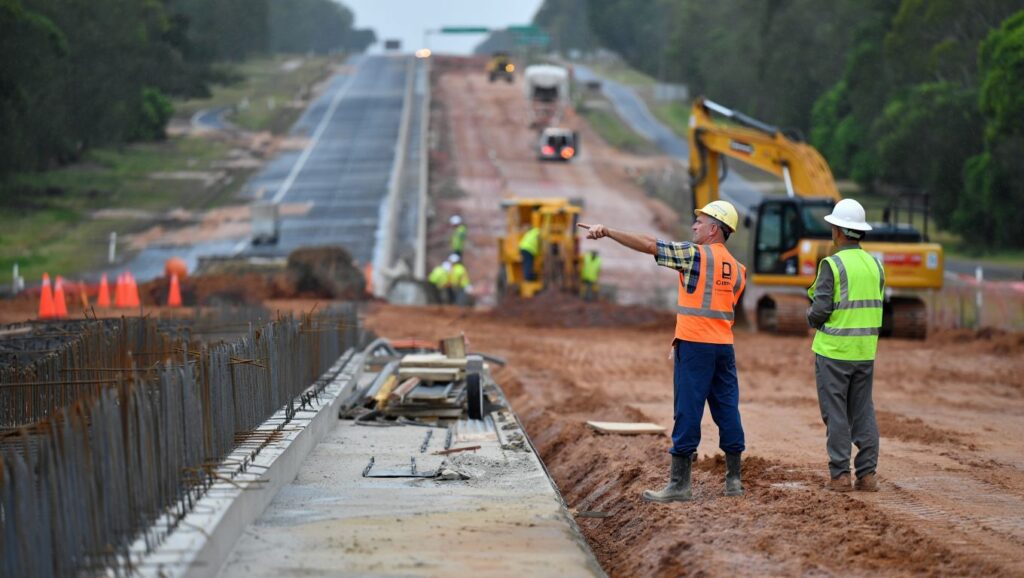
Traffic north of Brisbane has become a byword for frustration, and the slip in key upgrade timelines has turned commuters into accidental experts on orange cones. What’s changed isn’t the ambition, but the reality of building a modern motorway under the most complex conditions Queensland has seen in years.
The short version is that there isn’t a single culprit, but a stack of small, compounding delays. As one site supervisor quipped, “It’s not one big delay; it’s a thousand tiny ones.”
Weather keeps rewriting the plan
Repeated wet seasons have saturated work zones and verges, forcing crews to chase short windows of dry ground and daylight. La Niña’s hangover left embankments soaked and subgrades fragile, multiplying rework when compaction fails and haul roads ravel.
Unpredictable downpours push paving and asphalting to the back of the queue, because hot-mix needs temperature and time. “You can’t lay a motorway like it’s a kitchen tile,” one engineer said, “or you’ll be back tomorrow fixing ruts.”
Difficult ground, hidden surprises
Sections sit on soft alluvium and acid-sulfate soils that demand careful treatment and constant testing. Every unexpected void, wet patch, or geotechnical variance adds days of stabilisation, redesign, or imported fill.
Bridge foundations hit harder rock or weaker soils than models suggested, prompting pile changes and revised programs. Small discoveries turn into permit updates and method shifts that ripple through the schedule.
Materials and workforce under pressure
The market is still running hot, with asphalt, steel, and quarry products going to competing megaprojects. Inflation hasn’t just lifted prices; it’s stretched lead times, forcing resequencing and temporary works.
Skilled labour remains tight, especially for traffic management, structures, and pavements. A supervisor can’t pour concrete without finishers, and a traffic switch can’t happen without accredited crews. “Every crew you can’t staff becomes a bottleneck,” a contractor noted.
Utilities and staging headaches
The corridor is choked with utilities—water, power, gas, and telecoms—that must be relocated before heavy works proceed. Each utility brings its own safety protocols, design sign‑offs, and outage windows.
Traffic staging is surgical, because the highway must stay open. Night work faces noise curfews near homes and habitats, shrinking the useful shift and pushing tasks into micro slots. One misaligned traffic switch can set a fortnight of crews adrift.
Approvals, ecology, and community guardrails
Environmental approvals are stricter than a decade ago, and for good reason. Koala habitat, waterways, and protected vegetation trigger seasonal blackouts, fauna spotters, and additional mitigations.
Community expectations are higher, with more consultation, more noise monitoring, and tighter access provisions for local streets and businesses. Every added condition is sensible in isolation, but together they slow the machine.
Scope creep meets safety and design evolution
As traffic data evolves, so do layouts—extra ramp lanes, longer merges, stronger barriers, and wider shoulders. Safety upgrades are non‑negotiable, yet each change reverberates through drainage, lighting, and ITS.
“Design is never done on a live corridor,” a project engineer said. “You learn from staging, then you adapt—and that burns time.”
Contracts, risk, and the funding jigsaw
Some packages went to market amid extreme volatility, leading to cautious bids and heavier contingencies. When risks sit unequally with contractors, disputes and re‑sequencing can creep into the program.
Cost sharing between state and federal partners requires formal variations and milestone gates. The money is there, but approvals are procedural, and procedure takes weeks that multiply into months.
So what would actually speed it up?
A faster finish is still possible, but it needs a sharper playbook and coordinated ownership across agencies and the supply chain.
- Lock earlier utility designs with shared digital models, fast‑track wet‑weather contingencies, pool accredited traffic crews across packages, ring‑fence quarry and asphalt allocations, and use alliance‑style contracts that reward shared risk and measurable gains.
None of this is glamorous, and none is a silver bullet. But dozens of well‑timed micro‑fixes beat one big announcement every time. The corridor will open, piece by piece, if planners protect critical pathways, fund wet‑weather options, and keep the design stable enough for crews to build what’s drawn.
In the meantime, commuters see only cones, queues, and frayed tempers, while the project team sees a layered puzzle that resists quick answers. “We’ll get there,” a site manager insisted, “but we need fewer surprises and more hours of dry, safe work.”