
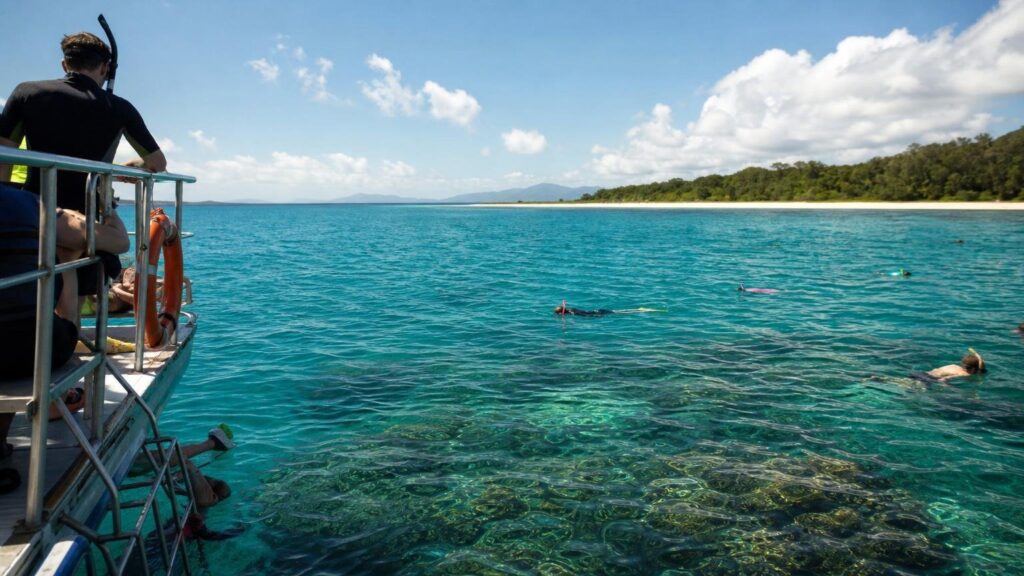
Trade the familiar for the quiet. This spring, head a little farther up Queensland’s coast, where the rainforest leans into glassy water and the reef feels startlingly close. You’ll find the same Great Barrier Reef drama, but with fewer timetables, fewer megaphones, and far more sky.
Go a little farther, gain a lot
Roll past the palm-fringed resorts, cross the slow ferry over the Daintree River, and keep driving until the bitumen yields to forest. The settlement at Cape Tribulation is small, sleepy, and mostly swallowed by green. Nights are punctured by stars, not streetlights. Mornings are set to the whip-bird, not delivery trucks.
This region moves at a human pace. You can actually hear your breath, and the sea breathing back. “Up here, time pulls over and lets you pass,” a local guide told me with a smile.
Reef access, minus the circus
From this quiet base, the reef is just as near as it is farther south. Small-boat operators zip across to Mackay and Undine Reefs, skimming a turquoise highway in about 25 minutes. There’s no queue of catamarans, no loudspeaker counting snorkellers by the dozen.
You suit up, slide over the side, and you’re hovering above fluorescent gardens. Hard corals spread like fans. Giant clams purse electric lips. Turtles appear with the unhurried confidence of resident landlords. On good days, visibility is ridiculous, the kind that makes you giggle into your snorkel.
“The reef feels yours up here,” said one skipper, cutting the engine to let a manta pass beneath the bow. A marine biologist added, “Smaller groups mean calmer water, less fin flurry, and better wildlife encounters.” It’s the same outer-reef magic, just without the big-boat bustle.
Rainforest rhythm between dives
On land, the world is equally alive. Boardwalks weave through fans of licuala palms and varnished mangrove roots. Cassowary tracks punctuate damp sand, and sunbeams turn the understory into cathedral light. Step from jungle to beach in a dozen paces, and you’ll find sand as pale as paper, rimmed by a reef that glitters just offshore.
Between tides, swim in freshwater at Emmagen Creek, a forest pool freckled with sunlight and leaf shadow. Then sneak to Myall or Thornton Beach, where the crowd is a curious heron and a crab testing new architecture.
Where to sleep and what to eat
Accommodation runs on a human scale: eco lodges with open lounges, cabins tucked into canopy, and campgrounds perfumed with damp earth. You fall asleep to rain on leaf and wake to the soft percussion of geckos.
Dining is unfussy and fresh. Think grilled reef fish with lime and herbs, or a burger crowned with local pineapple. Smoothies taste like distilled sunlight, heavy with papaya and passionfruit. There’s no white-tablecloth theatre—just good food served by people who still say hello. Bring some cash, bring a flexible appetite, and expect kitchens to close when the last light goes gold.
When to go, how to get there
Spring in Far North Queensland is warm, bright, and usually kind to boaties. Seas can be glassy, and water temperatures sit in the sweet spot. From November, marine stingers arrive; operators provide full suits, which are more comfort than costume and keep the sun off your shoulders.
Getting here is simple. Fly into Cairns, drive two and a half to three hours north, and take the cable ferry across the Daintree River. A regular car is fine to the village; beyond that, the Bloomfield Track turns wild and asks for 4WD. Phone signal dips and disappears, which is half the point.
A simple three-day plan
- Day 1: Arrive by midday, cross the ferry, check into your hideaway, and take an afternoon boardwalk through the jungle. Sunset on the beach, bare feet, salty grin.
- Day 2: Morning reef trip on a small boat; aim for first departure to catch calm water. Nap after lunch, then a creek swim and a dusk beach walk.
- Day 3: Early rainforest wander, coffee with treetop views, and a slow drive south, stopping for fruit stalls and photo-friendly bends.
Why this detour changes everything
Up here, your days are measured in tides, not time slots. You feel the reef as a living neighbour, not a scheduled attraction. You share the water with a handful of fellow floaters, not a ship’s manifest.
The shift is small on a map, huge in your bones. Go a little farther, give yourself some silence, and let the rainforest ferry you to the sea. When a turtle brushes the edge of your vision and the coral blinks back in mineral colour, you’ll understand why locals just nod when asked where to base your Great Barrier Reef escape.