
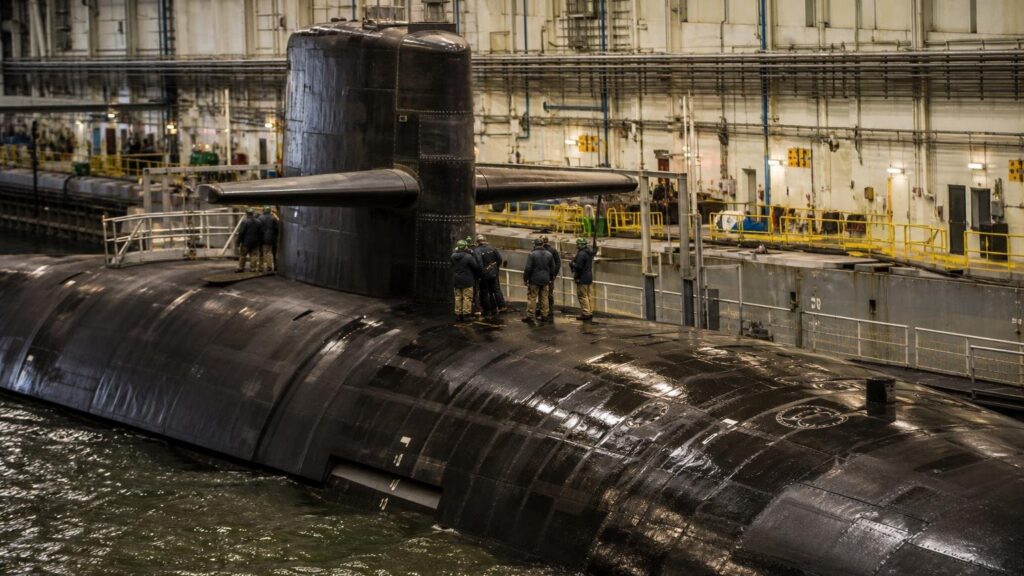
Australia is preparing to field nuclear‑powered submarines while remaining a non‑nuclear‑weapon state, a break with decades of precedent. The move signals a strategic bet on undersea reach and deterrence without crossing the line into armaments. Partners in AUKUS say the plan is “nuclear‑powered, not nuclear‑armed,” a mantra meant to calm regional nerves and nod to nonproliferation norms. It is a bold, costly undertaking that will test political will, industrial capacity, and international safeguards all at once.
Why nuclear propulsion changes the game
Nuclear boats stay submerged for months, carry more sensors, and move farther and faster than diesel‑electric counterparts. For a continent‑sized maritime nation, that endurance translates to credible presence in the vast Indo‑Pacific. The capability promises stealth, sustained surveillance, and faster response across chokepoints and sea‑lanes.
Supporters frame the choice as propulsion, not warhead, giving Australia reach without escalation. The phrase “nuclear‑powered, not nuclear‑armed” has become a policy lodestar and a political shield. Critics counter that the symbolism alone may fuel tensions, inviting misreadings and countermoves.
The AUKUS pathway, step by step
The plan unfolds in phases designed to build skills, manage risk, and sequence delivery. Australian sailors are training with US and UK crews while bases and regulators are readied at home.
- A rotational presence of US and UK boats at HMAS Stirling is slated from 2027, dubbed a Submarine Rotational Force‑West to grow workforce and know‑how. Australia aims to buy US Virginia‑class submarines in the 2030s to avoid a capability gap. A new SSN‑AUKUS design, British‑led with American systems, would be built in the UK and Australia, with the first Australian‑crewed boat in the early 2040s.
Officials call this the “optimal pathway,” a phrase that masks how ambitious the schedule and supply‑chain demands really are. Each step must align training, infrastructure, safety, and allied exports to tight windows.
Safeguards, fuel, and a global first
Because the US and UK use highly enriched uranium cores, proliferation experts worry about precedent and diversion risks. AUKUS partners pledge sealed reactor units, no enrichment or fuel handling in Australia, and cradle‑to‑grave accountability for fissile material. The IAEA is working on tailored safeguards for naval propulsion, a genuine “test case for the nonproliferation regime.”
Canberra emphasizes compliance, transparency, and inspections that satisfy the letter and spirit of its NPT and IAEA obligations. The fuel will arrive as complete modules and depart the same way, with spent cores managed under long‑term arrangements. Australia has also committed to host a permanent disposal solution on sovereign territory, targeting the 2050s for full readiness.
Some experts prefer low‑enriched fuel to reduce proliferation sensitivity, but that would require different reactors and deeper design changes. For now, the HEU path reflects interoperability and the reality of Anglo‑American nuclear propulsion heritage.
Price tag and industrial lift
This is a generational project with a generational bill. Government estimates run to A$268–368 billion over three decades, covering workforce, shipyards, boats, and through‑life support. That money buys not just hardware, but a sovereign ecosystem of nuclear‑submarine skills.
Canberra is standing up a dedicated agency, a naval nuclear safety regulator, and expanded yards at Osborne and HMAS Stirling. The program could sustain roughly 20,000 highly skilled jobs across engineering, program management, and nuclear‑safety disciplines. “A generational project” isn’t just rhetoric; it is a warning about patience and payroll.
Regional reactions
In Southeast Asia, responses are measured and mixed, balancing concern about arms racing with quiet interest in stability. Some capitals stress transparency and IAEA oversight while watching Chinese submarine activity and maritime coercion grow. For them, undersea deterrence can be stabilizing if paired with restraint and clear communication.
Beijing calls the plan destabilizing, painting AUKUS as a bloc that erodes nonproliferation norms. Canberra replies that the boats change propulsion, not posture, and enhance interoperability with allies to keep sea‑lanes open. The diplomatic task is to make “presence without provocation” more than a slogan.
Time, risk, and what success looks like
The timeline is long, and schedules in submarine programs rarely get shorter. Australia must extend its Collins‑class life to avoid a gap, while absorbing complex technology and new regulatory burdens. Supply‑chain friction, workforce shortfalls, and export‑control bottlenecks are predictable headwinds.
Success will look boring to the public and very busy behind the scenes: sailors training, welders qualifying, regulators licensing, and allies coordinating parts and patents. If the “optimal pathway” holds, the first Australian‑crewed nuclear boat will slip quietly to sea in the 2040s, carrying no warheads but a great deal of weight for Australia’s security and the global nonproliferation system.