
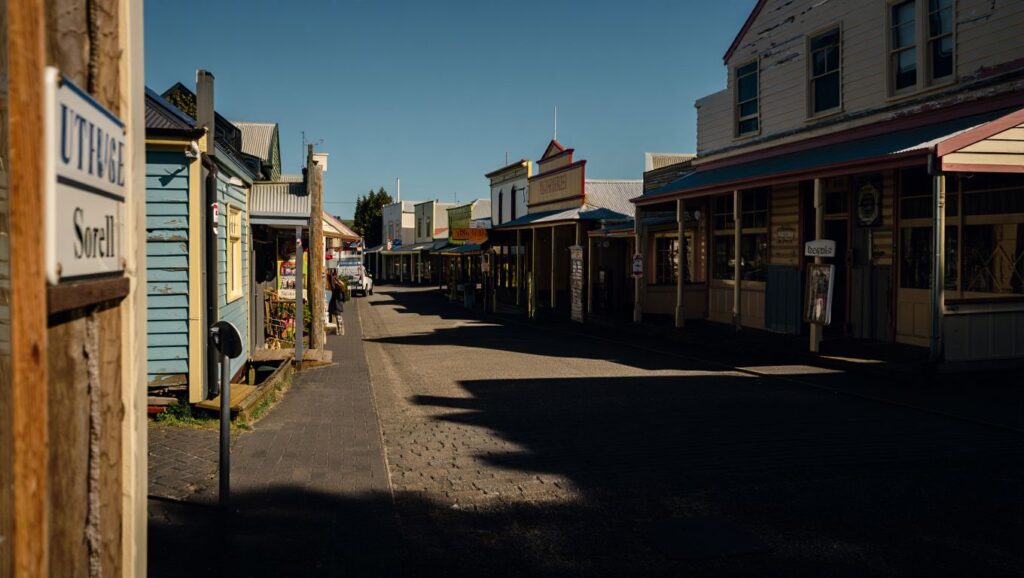
Morning light slips over a stone bridge, and a small river murmurs below. Cottages crouch behind clipped hedges, their sandstone faces warmed by a pale sun. The air smells of woodsmoke and something buttery, a bakery pulling trays from a wood‑fired oven. You pause, because nothing here is loud, and everything seems carefully kept.
“It’s the kind of place you plan to pass through, then stay for hours,” someone says at the bar, polishing a glass. The line fits, because the town moves at a human pace, the kind you only find when a highway steps aside.
Meet Ross, a riverside time capsule
This is Ross, a graceful village on the Macquarie River in Tasmania’s Midlands, neatly wedged between Hobart and Launceston. Blink and you could miss its turn, yet linger and you catch layers of history. Georgian cottages sit like pocket‑sized manors, with pencil‑thin chimneys and deep eaves. Elms lace the streets, throwing green shade in summer and gold in autumn.
The town’s centre hides little, because little needs hiding. Everything is close, everything looks made to last. “There’s no need to rush a place that doesn’t rush you,” a visitor writes on a postcard, sliding it into a mailbox.
Streets stitched in sandstone
Ross is knitted together by stone, most famously at the bridge arcing over the river since the 1830s. Its carvings — faces, foliage, and sly grotesques — were cut by convict stonemasons, a gallery left in warm sandstone. Walk it slowly and watch the light slide over chiselled curves.
Up the rise, a former women’s prison — the Ross Female Factory — is quiet now, yet listed with the Australian Convict Sites as a UNESCO World Heritage place. The ground feels soft, the stories feel hard, and the guides handle both with care. You step out to sunlight, grateful for a bench and the steadying river.
Small‑town rituals worth keeping
Here, daily life still feels tactile. At the Ross Village Bakery, a blackened oven bakes scallop pies with flaky lids and peppery warmth. Locals nurse mugs of tea as if the weather might listen. Across the way, the Man O’ Ross Hotel keeps a low hum, doors open to old floorboards and a tidy garden.
There’s a gentle thread of Japan through town, drawn by a bakery facade that reminds some of a beloved anime. Fans arrive with quiet curiosity, nose the pastries, and take photos under the eaves. “It feels familiar and far, all at once,” someone murmurs, smiling into a paper bag.
A slow afternoon, well spent
- Trace the bridge’s carvings, then watch the Macquarie River shuffle past its pale piers.
- Wander the Female Factory site and read the spare, sober panels in the low sun.
- Hunt the playful “Temptation • Recreation • Salvation” sign near the church, a cheeky nod to the town’s streets.
- Browse a corner of antiques, running a hand over old timbers and worn‑brass latches.
- Finish with a scallop pie in the bakery yard, flaking pastry into your lap, absolutely content.
When the light is kindest
Ross is good in any season, but some days are gilded. In autumn the elm avenues turn buttery and the river looks like split bronze. Winter wears mist, and the pub fire throws a gentle glow at four in the afternoon. Spring brings clipped lawns and wisteria clinging to pale stone. Summer lingers late, and the bridge keeps its cool, even when the paddocks sing with crickets.
Getting there without rushing
From Hobart, point the car north and leave the A1 for a short loop; from Launceston, it’s a quick southbound run with wide‑sky views. The roads are open, the signage modest, and the last few kilometres feel older than the map. Park near the post office and start on foot, which is how the town tells its stories best.
Staying the night, under very quiet stars
Rooms here are small, sweet, and often tucked inside heritage cottages. A former stable becomes a suite, a front parlour turns into a reading nook, and breakfast shows up with warm bread and local preserves. Nights are dark, the kind that make stars look close, and morning arrives with a magpie scale and the smell of dough.
If you travel on long weekends, book ahead, because places with honest charm tend to fill. Otherwise, wander in lightly, ask at the hotel bar, and accept whatever room has keys on the hook.
Why this quietness matters
Beauty is easy to spot, but grace takes a little time. Ross offers both, wrapped in stone, river, and careful habits. There are no big venues, no loud tours, no glossy promises — just a lived‑in elegance that doesn’t demand your attention, yet keeps it anyway.
“Maybe the best thing about Ross,” a local says, “is that it doesn’t need you to say it’s the best.” On the walk back to the car, pastry flakes caught in your scarf, you realise that’s exactly the point — and you promise to keep the secret as long as you can.