
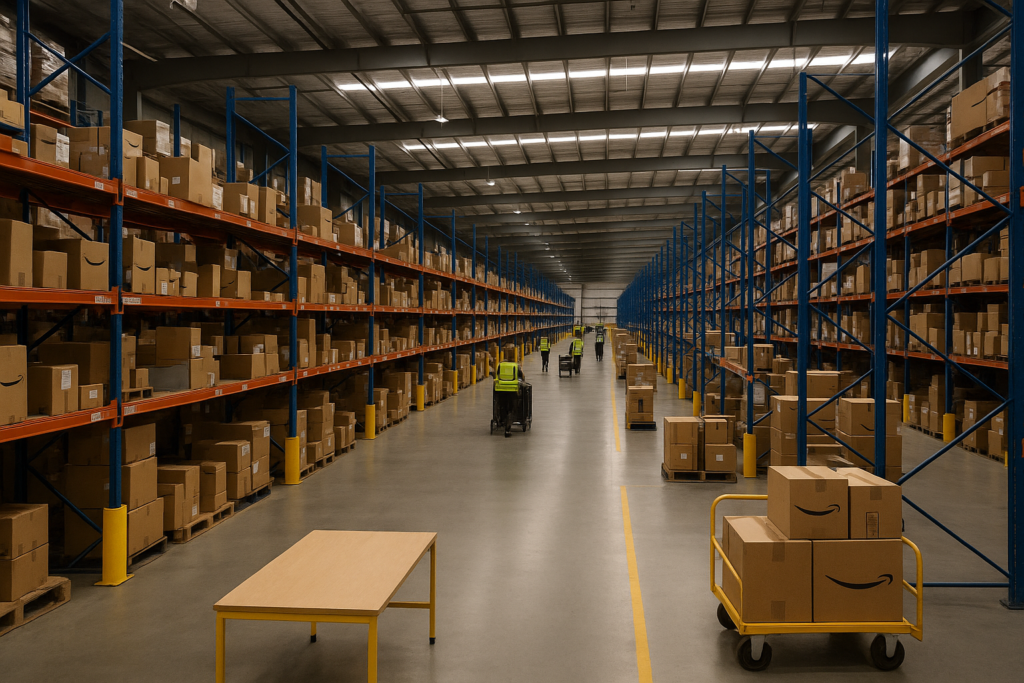
The air inside the cavernous complex is crisp, the hum of conveyors steady but not loud. Before dawn, palettes glide, scanners blink, and a quiet discipline settles over the aisles. It looks like a factory of light, where barcodes stand in for raw materials and time is the main ingredient. Staff talk in clipped codes, but the mood feels surprisingly calm.
A day on the floor
Rows of shelving climb several stories high, creating narrow canyons stitched by yellow safety lines. Mobile robots ferry totes like patient couriers, pausing when a human steps near. At each workstation, a screen proposes the next move, nudging workers through the rhythm of pick, place, and scan.
“It’s like a small city under one roof,” says a senior site manager during a guided tour. “Everything has a postcode, and every second has a job.” The choreography is relentless yet precise, trimmed to shave seconds without drama.
Why 2,000 new roles
The operation is scaling for a surge in regional demand, with the company planning to add around 2,000 positions over the next year. Executives frame it as a bet on speed, resilience, and customer reach—the holy trinity of modern logistics.
An Amazon spokesperson puts it plainly: “We’re hiring for growth, not hype.” The goal is to widen next‑day coverage, build peak‑season muscle, and harden the network against shocks. Many roles are entry‑level, with pathways to technical and leadership tracks.
- Warehouse associates for picking and stowing
- Problem‑solve leads for exceptions and quality
- Maintenance techs for robotics and conveyors
- Safety ambassadors for training and ergonomics
- Area managers for shift coordination
- Seasonal staff to absorb holiday peaks
Machines and people
Here, automation is a partner, not a final answer. The bots shrink walking time, but only people make the last‑inch judgment—wrangling odd shapes, reading fragile labels, catching subtle defects. “Robots are great at the repeatable,” one engineer says, “but humans are great at the unusual.”
Every process is built for handoffs, the invisible baton‑passes between silicon and skin. When a tote stalls, a human unknots the snag; when orders spike, algorithms redirect the flow. The baseline is redundancy, so no single hiccup becomes a halt.
The warehouse floor mixes standardized stations with micro‑improvements seeded by front‑line ideas. A new grip taping on scanner handles. A shelf angle tweaked for a tricky SKU. “Small changes are the big wins,” a shift lead notes.
Training, pay, and safety
Training starts with simulators, not just manuals—gamified modules that test reflexes and situational awareness. Recruits practice scanner flows, safe lifting postures, and how to escalate an exception before graduating to live lanes. Coaches shadow new hires until the rhythm feels natural.
On compensation, leaders emphasize “competitive pay” and structured progression, though they decline to share figures. The pitch leans on stable hours, skill stacking, and predictable rosters. “You can arrive with zero experience and be promotion‑ready in under a year,” says a training supervisor.
Safety dominates the vernacular—from color‑coded zones to proximity alerts that ping when a robot strays close. Ergonomic breaks are scheduled, and roles rotate to blunt repetitive‑motion strain. “If a process costs a back, it’s the wrong process,” a safety manager insists.
The human texture
Between shifts, you catch the real texture—a quiet laugh by the locker rows, a playlist sneaking from a jacket pocket, a handwritten note on a team board. People trade tips on wrist stretches and which gloves breathe in summer heat. The place is big, but tribes form in aisles.
For some, this is a first steady paycheck; for others, a detour on the way to a trade or degree. “I came for the hours,” one associate says, “but I stayed for the upskilling.” Certainty is its own currency, especially when rent won’t wait.
Local ripple effects
Hiring at this scale reshapes the map well beyond the loading docks. Shuttle routes extend into new suburbs, lunch counters add early openings, and suppliers chase their own orders. Councils talk infrastructure while landlords post fresh “For Lease” signs near bus links.
Community groups see a shot at youth employment, return‑to‑work parents, and mid‑career switchers. The flip side is traffic, housing pressure, and a labor market that tightens in adjacent sectors. Growth brings opportunity—and a list of civic chores to match.
What to watch next
The next twelve months are the test: can new crews keep the promise of speed without fraying the edges. Engineers whisper about smarter routing, gentler robots, and packaging that’s born right‑sized. Managers eye weather disruptions, supplier glitches, and calendar spikes only retail can conjure.
Back on the mezzanine, the view is all motion, but the vibe remains measured. “Logistics is just promises made visible,” the site lead says, half‑smiling. If the hiring wave lands as planned, thousands more will help keep those promises moving by this time next year.