
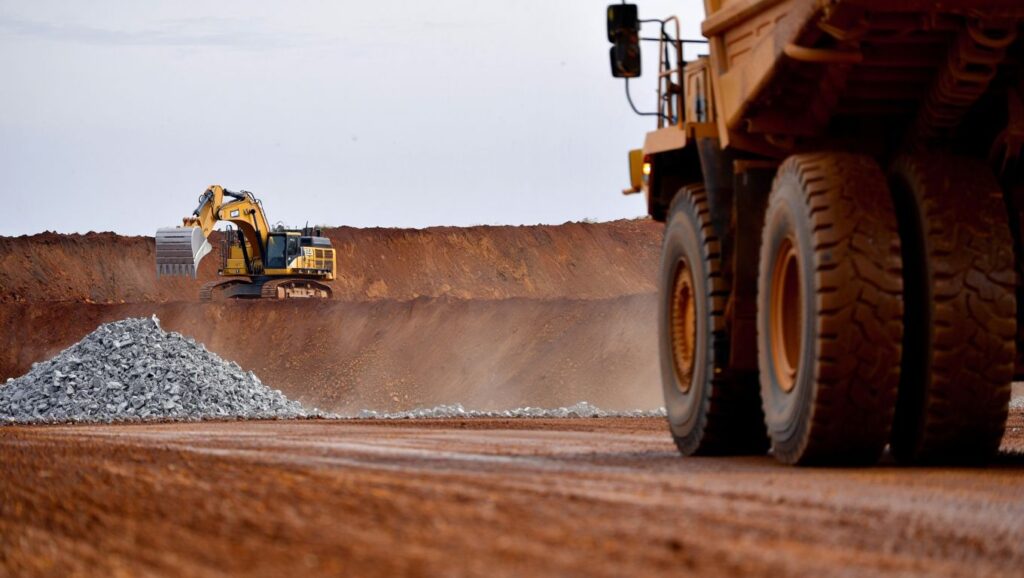
The lithium map has tilted, and the compass now points firmly to Western Australia. In a few fast years, the state has become a pillar of battery minerals, exporting ship after ship of high‑grade spodumene while building the chemical plants needed to turn rock into energy storage. By several industry counts, the region’s mined output now surpasses any single producer outside China, reshaping how supply chains are priced, planned, and politicized.
“Lithium isn’t rare,” goes an oft‑repeated line in the sector, “but reliability is.” The remarkable concentration of projects, ports, and processing along one coastline has made reliability Western Australia’s quiet superpower, even as costs, power constraints, and market whiplash test the model.
Why one state dominates
The geology was always there. From Greenbushes—the world’s most mature hard‑rock lithium mine—to Pilgangoora and Wodgina, the state’s spodumene deposits are high‑grade, near surface, and close to infrastructure. That unusual trio shortens timelines, lowers unit costs, and attracts capital that prefers certainty over perfection.
“Port‑to‑plant hours, not miles, set the cost curve,” say traders who watch the Pilbara like a spreadsheet. Western Australia’s ore can be drilled, blasted, crushed, and shipped with a cadence that suits modern gigafactories: frequent cargoes, predictable specs, and fewer political variables than many brine‑rich basins.
Add policy consistency—royalty regimes that investors can actually model, environmental rules that, while demanding, are knowable, and a workforce steeped in bulk‑commodity discipline—and critical mass follows quickly.
What accelerated the shift:
- High‑grade hard‑rock resources, short logistics lines, stable governance, and a deep bench of mining know‑how concentrated in one coastal corridor.
From ore to chemicals
For years, Australia shipped concentrate and left most value in Asia. That equation is changing as Kwinana and Kemerton expand hydroxide output and as new refineries inch through commissioning pains. The learning curve is steep—converting spodumene into battery‑grade chemicals is a chemistry business with unforgiving specs, tight impurity limits, and batch‑to‑batch verification.
“We don’t sell rocks,” a plant manager quips, “we sell consistency.” Each incremental ramp adds domestic optionality: more offtake can be priced against local conversion, blended with offshore tolling, or redirected as downstream contracts tighten.
Still, China remains the gravitational center of processing, with the lion’s share of global conversion capacity and a dense ecosystem of reagents, equipment, and contractors. Western Australia’s play is not to replace that network overnight, but to build a parallel track that offers automakers and cathode plants a second, credible anchor.
Prices, cycles, and growing pains
The very scale that makes the state so central also amplifies the cycle. When prices roar, expansions sprint; when they sink, high‑cost pits and ambitious refiners feel the squeeze. Power constraints, labor tightness, and construction inflation add friction. Environmental approvals demand real community engagement and credible biodiversity plans.
Hard‑rock mining carries a different set of trade‑offs than brines: more visible land disturbance, higher energy use, but tighter control over timeline and grade. That predictability continues to beat out longer‑dated brine projects that can lag on permits, evaporation, or water politics.
“We used to chase price,” one buyer says, “now we chase availability.” Automakers aren’t just signing offtakes; they’re wiring deposits, co‑investing in midstream, and auditing supply‑chain emissions down to the kiln. Western Australia benefits from that scrutiny: grid decarbonization targets, renewable integrations, and robust reporting make it easier to sell molecules with a cleaner story.
The global ripple effect
For cathode makers in Korea, Japan, and Europe, a supply spine that runs Perth–Port Hedland–Pacific is profoundly practical. It shortens lead times, stabilizes qualities, and helps procurement teams meet local‑content rules from the IRA and EU critical‑minerals frameworks. Price discovery is shifting, too; more contracts index to spodumene and hydroxide from Australian ports, diluting the dominance of any single inland hub.
On the competitive front, Chile and Argentina are pushing to grow brine volumes, while Africa readies fresh hard‑rock tonnes that could reshape the seaborne market. Yet the bar has risen. Buyers now want reliability, ESG transparency, and scale—all at once—and those three sit comfortably in Western Australia’s wheelhouse.
Policy will decide speed. Streamlined approvals for grid upgrades can unlock refinery uptime; training pathways can ease engineering bottlenecks; and public investment in common‑use infrastructure—acid, lime, and storage—can compress both capex and risk. The more of that “industrial plumbing” gets built, the stickier the ecosystem becomes.
“Follow the spodumene,” traders like to say, half‑joking but accurate. Today, that path points to one state whose ore, ports, and emerging chemical plants have fused into a genuine hub. The center of gravity in battery materials doesn’t shift often, but when it does, it favors places that can deliver the same thing, over and over, at scale. Western Australia is doing exactly that—and in doing so, it has redrawn the map of who holds the most meaningful share of the world’s lithium.