
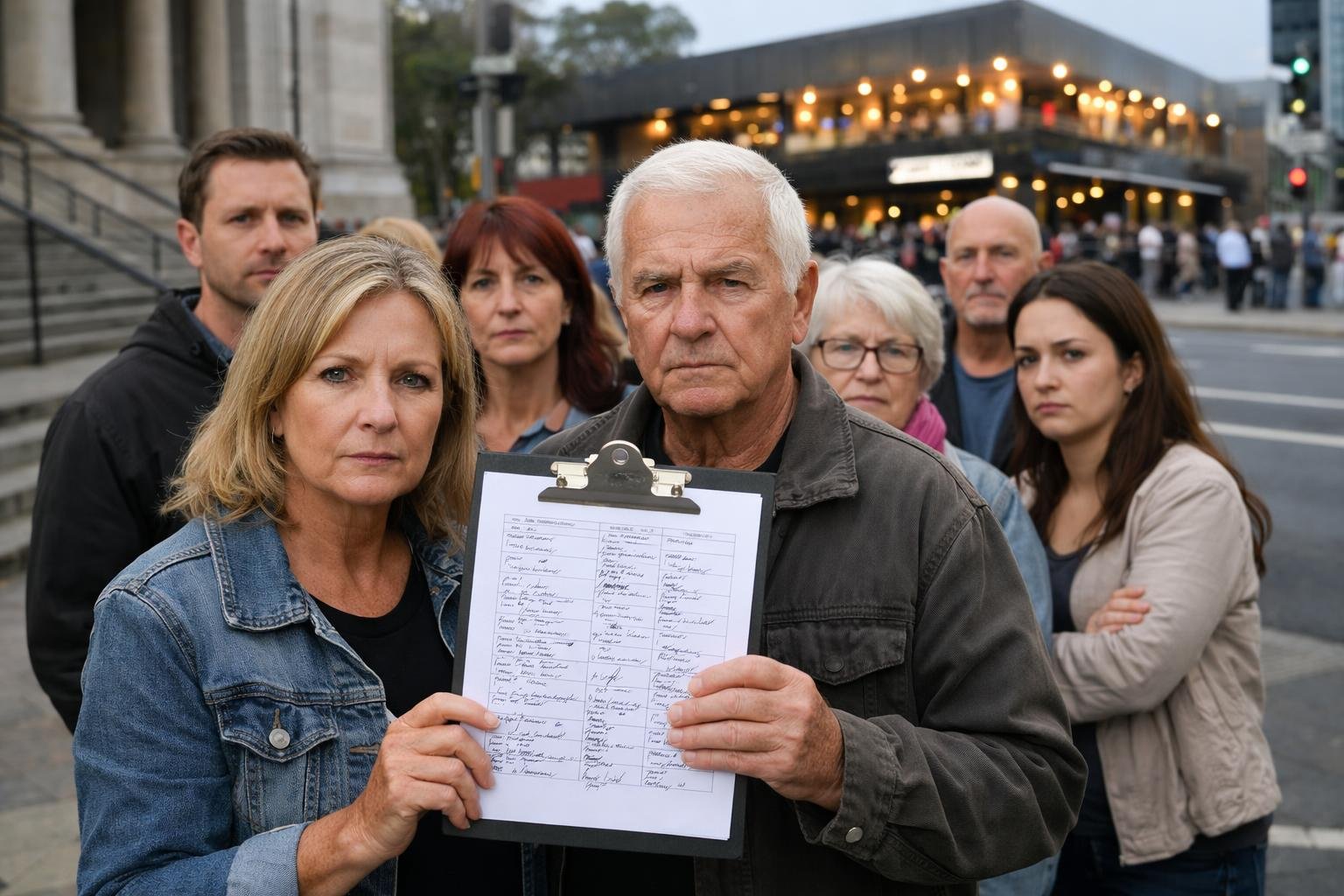
On a warm Saturday, basslines leaked across laneways, rattling windowpanes and keeping toddlers awake past bedtime. By Monday, a thick sheaf of signatures — more than 600 in all — landed on the desk of the City of Adelaide, pleading for urgent action on late‑night noise spilling from a newly minted entertainment space in the West End. For some, the nights have become an unwanted festival; for others, the sound is the pulse of a city finally feeling alive again.
A growing chorus of complaints
Residents say the music is “relentless,” a low thrum that rises after midnight and lingers like fog. “You can measure decibels, but you can’t quantify fatigue,” said Joanna Nguyen, who lives two streets away and works early shifts. “At 2 a.m., the bass isn’t just sound — it’s a physical pressure.”
Several families report moving mattresses to back rooms, or sleeping with earplugs and white‑noise machines. Others have started tracking peaks on phone apps, capturing spikes they say coincide with headline DJ sets and late‑finishing encores that drift across rooftops.
The petition asks the council to enforce tighter operating conditions, require additional soundproofing, and introduce clearer penalties for breaches. “No one wants to shut down culture,” said petitioner Mark Russo. “We just want our nights back — and a chance to wake up human.”
Venue says it’s playing by the rules
The club’s owners counter that they’ve adhered to every permit, engaged accredited acousticians, and installed substantial insulation. “We love our neighbours — we live here too,” said co‑owner Ava Mendoza. “We paid for additional wall treatments, rebuilt a section of the roof, and limit outdoor service after 10 p.m.”
Management argues the area is a designated arts and nightlife precinct, developed over years to draw visitors and sustain jobs. “If the city wants a vibrant economy, it needs a vibrant night,” Mendoza added. “We’re not asking for special treatment — just a fair standard that supports music and respects sleep.”
An independent sound consultant engaged by the venue claims on‑site readings show compliance at the boundary, with intermittent over‑threshold events linked to external factors: passing motorcycles, crowd cheers, or nearby venues with open doors.
What the council can do next
City officials are reviewing the petition, with staff preparing an options paper for elected members. A spokesperson said the council can pursue compliance checks, seek revised conditions on trading hours, and recommend works to limit emissions. In complex cases, matters may be referred to state authorities for licensing and environmental oversight.
Councillor Priya Raman framed the issue as a familiar urban tug‑of‑war. “We’ve invested in a creative city, and that brings people and sound,” she said. “But residents deserve predictable nights, not roulette with their rest.”
Balancing nightlife and neighbourhoods
The friction isn’t new — it mirrors global disputes from Berlin to Melbourne, where heritage pubs rub shoulders with glass‑walled apartments. Researchers note that bass travels uniquely through structures, turning floors into gentle drums even when high‑frequency notes seem muted.
Urban planners talk about the “agent of change” principle: whoever arrives second — be it a venue or a resident — takes on more responsibility for mitigation. In practice, the burden often becomes shared: better building codes, smarter venue design, and clearer curfews for outdoor activation all help.
Acoustics engineer Daniel Kass offers a practical view. “There’s no single silver bullet,” he said. “But layered solutions — structural damping, secondary glazing, calibrated limiters — can cut perceived impact dramatically.”
Possible fixes on the table
- Enhanced venue treatments: additional bass traps, resilient channels, vestibules on entry doors
- Smarter operations: stricter after‑midnight limits, staggered crowd dispersal, quieter end‑of‑night playlists
- Neighbour support: subsidised secondary glazing, advice on room layout, and loanable white‑noise devices
The human side of decibels
For shift workers, students, and new parents, the stakes feel painfully personal. “It’s not just the wakeups — it’s the anxiety of anticipating the next boom,” said Nguyen. “You lie there, counting seconds between beats.”
Performers see another angle. Local DJ Marcus Vale calls nightlife the city’s “front‑of‑house soul.” “We want to play for our community,” he said. “None of us want to be the reason a kid can’t sleep before a test.”
That duality — culture as lifeblood and as late‑night nuisance — animates nearly every email, every council submission, every neighbourly chat on a Tuesday morning.
What happens now
The council will hear public deputations next week, with a formal decision expected within a month. Behind the scenes, staff have asked for updated readings, a fresh acoustic report, and a timeline for any engineering upgrades proposed by the venue’s team.
Mendoza says the business is ready to spend more on treatments, provided changes are “targeted, evidence‑based, and don’t quietly amount to a de‑facto shutdown.” Residents say their patience is thin but not gone. “Give us a plan with dates and we’ll meet you halfway,” Russo said. “We don’t need silence — we just need our homes to feel like homes again.”
Some nights, the city will always hum. The question before Adelaide is how loudly that hum should throb, and who carries which part of the burden. Somewhere between a kick drum and a heartbeat lies a workable compromise — one that lets a neighbourhood sleep while a stage still comes alive.