
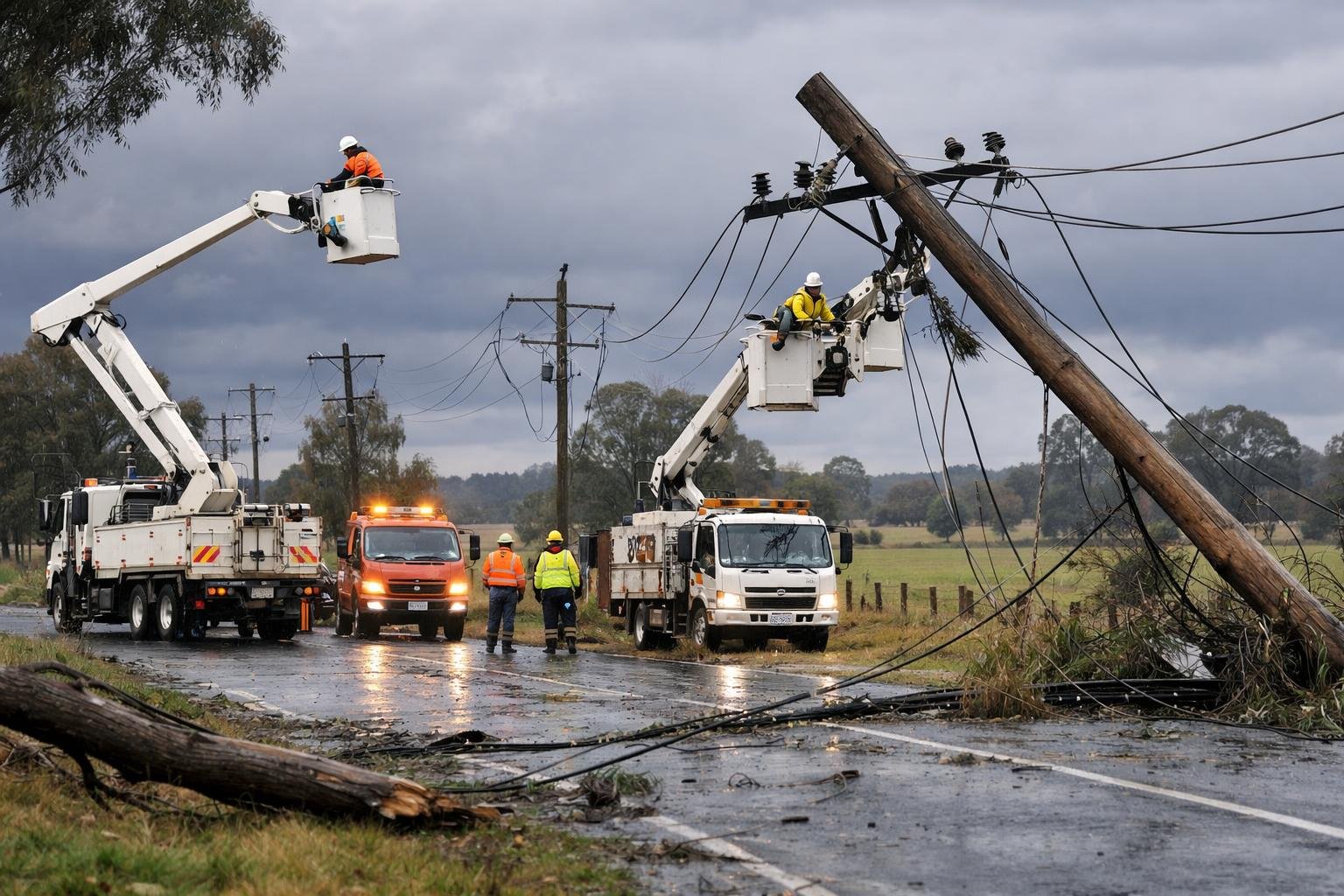
Sheets of rain, violent wind, and sudden lightning carved a ragged path across regional Victoria, leaving neighborhoods dim and quiet as power blinked out. For hours, the only sounds were sirens and the crack of branches, as crews fanned out to assess a tangled, sodden grid. What followed was a careful push to restore electricity while keeping both workers and residents safe.
Storms snap lines and fell trees
Gusts strong enough to topple gums ripped down spans of lines, scattering live wires across rural roads and farm fences. Substations rode out surges, but feeder routes into small towns took a direct hit. “We’re seeing widespread damage to poles and crossarms,” one field supervisor said, “with access slowed by flooded tracks and blocked lanes.”
Power distributors described a dynamic situation, with faults clearing in some corridors as new alarms pinged elsewhere on the network. The rapid-fire pace of repairs meant estimated restoration times remained fluid.
Crews race to restore service
By late afternoon, bucket trucks, patrol utes, and vegetation teams were moving in coordinated waves. Technicians isolated faults, re-strung spans, and swapped out cracked insulators under watch of spotters and SES volunteers. “Our priority is to make the area safe first,” an operations spokesperson said, “then bring customers back in the largest blocks we can.”
Rural terrain added stubborn delays. One crew walked equipment across a paddock churned to mud by overnight rain, while another waited for a fallen oak to be cut from a fenced easement. “It’s painstaking, meter by meter,” a lineworker noted.
Communities adapt in the dark
Corner cafes fired up small generators, pouring hot coffee to neighbors who brought phone chargers and blankets. A volunteer footy club opened its rooms for elderly residents, offering warm soup and a bank of shared powerboards. “People just started showing up with eskies and extension leads,” said a local organizer.
Farmers hustled to protect chilled stock, moving calves to sheltered bays and checking electric fencing left dead by the cut. At one dairy, staff rotated portable pumps to keep milk vats within safe temperature ranges.
Why the fixes take time
Restoration is more like a puzzle than a single switch. Fault indicators can point to multiple breaks, and every repair must be re-energized with care to avoid a backfeed. In bushland corridors, crews must check for hidden damage, including hairline cracks that only show under load.
Vegetation clearance is a crucial step. Storm-bent branches can spring back onto freshly repaired conductors, creating a new fault minutes after re-energizing. That’s why chainsaws often arrive before the wire.
Official messages and safety advice
Authorities urged patience and caution. “Assume every fallen line is live, keep 8–10 meters clear, and call emergency services,” a regional incident controller said. Residents were asked not to move temporary barriers or drive around repair cordons.
If you’re waiting on power, simple steps can protect food, tech, and health:
- Keep fridges and freezers closed; use an external thermometer to check temperatures before discarding food; charge devices at community hubs; use fuel-powered generators outdoors only; check on vulnerable neighbors and share spare batteries.
Grid resilience under scrutiny
The event sharpened a familiar debate: how to harden a sprawling network against sharper, wetter storms. Utilities highlighted ongoing programs—targeted undergrounding, stronger poles, and smarter reclosers that isolate faults faster.
Energy analysts pointed to distributed solar, community batteries, and microgrids that can island critical services during blackouts. “Resilience is about many small layers, not one silver bullet,” said one independent observer.
Human stories behind the outage
In a darkened aged-care wing, nurses clipped small LED lights to walkers and door handles so residents felt oriented during the night. A petrol station on the highway processed cash-only sales, handing out paper receipts by torchlight to keep drivers moving.
A family in a weatherboard home brought the barbecue under the back veranda, grilling sausages while kids did homework by battery lantern. “It’s a little inconvenient, but also kind of quiet, which we don’t get very often,” the parent laughed.
Progress and what’s next
By early evening, restoration figures ticked up, with dense town centers lighting first as backbone feeders came online. Outlying farms and bush properties faced longer waits where individual service drops needed inspection.
Utilities promised late-night and next-day patrols, aided by drone surveys where weather permits. Customers were encouraged to report lingering faults, especially lines caught in tree canopies that may not trigger automatic alerts.
Staying prepared for the next hit
Emergency planners urged simple habits: maintain a small kit with headlamps, spare batteries, a power bank, and basic first-aid. Know how to manually open your garage, and store a few liters of clean water if pumps rely on electricity.
For households with frequent interruptions, a modest inverter generator or a battery-backed inverter can keep essentials—modem, router, fridge, and a few LED lights—running without fuss or fumes.
Across backroads and main streets, the shared goal was the same: steady, methodical work to bring lights back and keep people safe. As the wind eased and rain thinned, the soft hum of returning power became the night’s most welcome sound.