
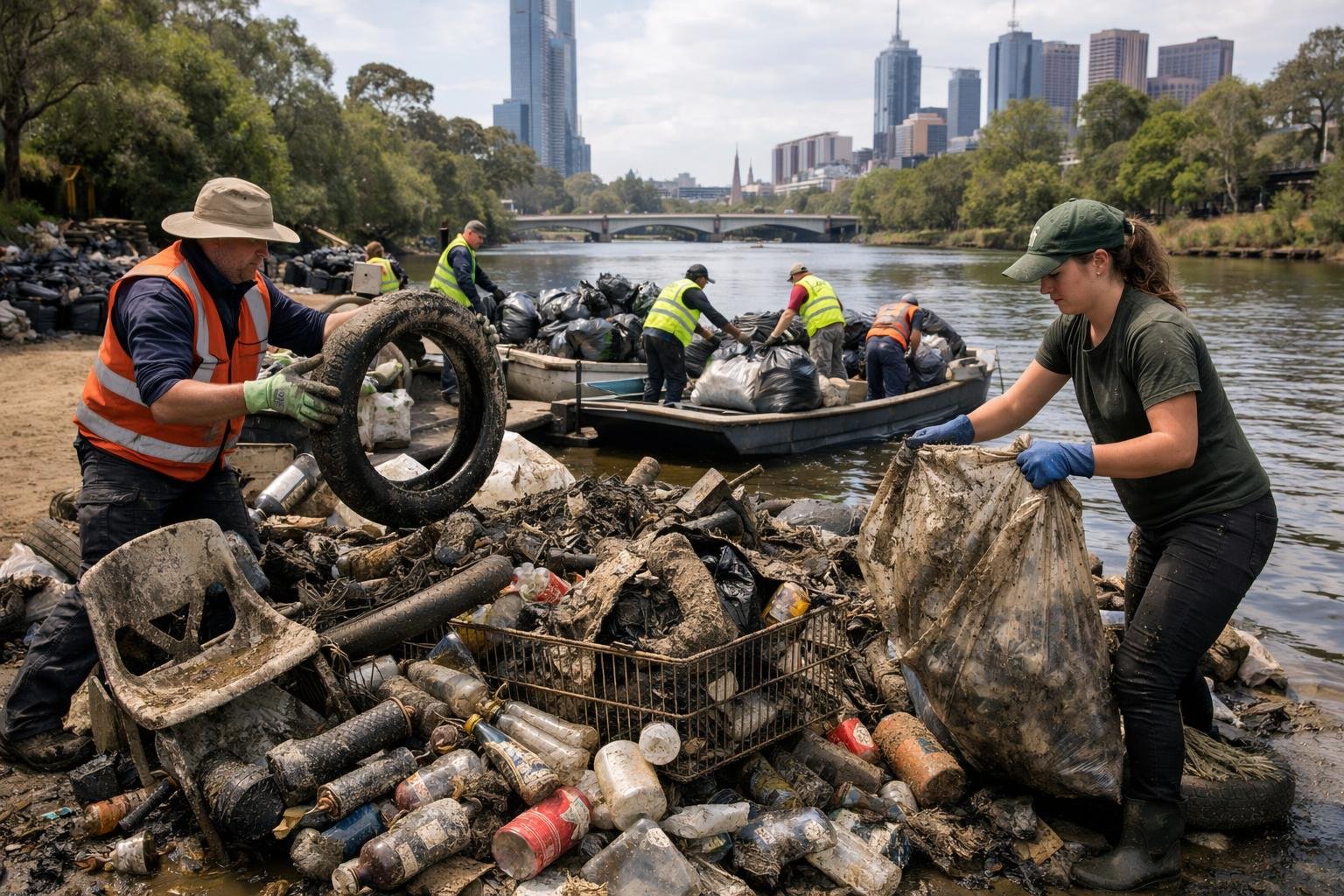
Dawn broke soft over Melbourne as skiffs and kayaks slid into the water, and a quiet determination met the river’s early mist. By midday, the banks were lined with bulging sacks, clinking bins, and a kind of cheer that only comes from shared effort. “You don’t expect it to feel this hopeful,” said one volunteer, wiping mud from a bright glove. “But it does.”
By late afternoon, the day’s tally had set a new benchmark, the kind that makes spreadsheets seem almost poetic. Organizers spoke of a surge of hands, a swell of will, and a sweep of debris that had never been so completely confronted. “This is a win for the river, and a win for community,” an organizer said, voice thin with happy fatigue.
Numbers that tell a larger story
The cleanup drew a crowd that outpaced expectations, filling registration sheets and spare boats. Coordinators counted families, scout groups, paddling clubs, and retirees who treat Saturday like a standing appointment with the river. “It’s the biggest cohort we’ve ever hosted,” one team lead noted.
What set the day apart wasn’t just sheer volume, but the choreography of logistics. Crews mapped low-flow eddies, scheduled rotating shifts, and paired newcomers with seasoned hands. “We wanted everyone to feel purposeful, not just busy,” said a safety marshal.
What surfaced from the depths
Across the shallows, grappling hooks snagged trolleys, while nets sifted bottle caps from slick reeds. Kayaks nudged milk crates toward waiting skiffs, and a diver’s gloved thumb rose in a shy victory sign. “Every pull has a very human story,” a veteran volunteer remarked.
- Plastic bottles and food wrappers, shopping trolleys, abandoned e-scooters and bike frames, fishing line, styrofoam beads, takeaway containers, and the occasional traffic cone
Each item felt oddly intimate, half artifact, half apology. “It’s not abstract pollution when it’s in your hands,” said a student, staring at a lidded jar cloudy with silt.
Why this river matters now
For Melbourne, the waterway is both artery and mirror, carrying runoff, memory, and weekend laughter past bridges and long shadows. A record haul doesn’t just lighten a channel; it recalibrates a city’s habits. “Rubbish is a symptom of deeper design problems,” said an urban planner. “Fixing it requires upstream thinking, not just downstream work.”
Fish breathe easier in clearer eddies, and birds reclaim snags that once trapped plastic. Fewer fragments mean less microplastic shedding, and a safer playground for rowing crews and children who skim stones at dusk’s edge. “You can hear more water, and fewer bottles clinking,” a rower said, half joking, half grateful.
The choreography of care
Behind the scenes, a web of small decisions made big outcomes possible. Volunteers pre-sorted trash for smarter recycling, tracked hotspots with geotagged notes, and moved with mindful pace to protect bank habitat. “We treat the river like a living partner, not a passive site,” a coordinator explained.
Training briefings emphasized sun safety, stable footing on slick rock, and the quiet power of mutual watchfulness. “You look after your buddy, you look after your reach, you look after the river,” an elder volunteer said with an easy smile.
A cleaner flow begins upstream
The day’s momentum points beyond a single event, toward routines that lock in change. Businesses can rethink packaging and loading bays, councils can tune street-sweeper routes, and residents can net drains before the first big downpour. “We need small habits that add up to big tides,” a local shop owner said.
Education remains the quiet engine of resilience, from schoolyard litter audits to citizen-science counts that make invisible pollution more visible. “Once kids spot the pattern, they become brilliant detectives,” one teacher laughed.
Voices from the banks
“I pulled up a bike frame and felt oddly tender, like I’d found a lost dog,” said a kayaker, shaking their head. “You haul it out, and the river looks immediately more awake.”
A longtime rower watched barges stack bags like soft bricks, then grew suddenly quiet. “It’s humbling to realize how quickly we can break something, and how patiently we must fix it.”
What comes next
The organizers will weigh, sort, and analyze the day’s catch, plotting hotspots where prevention can outpace pickup. The data will inform stormwater retrofits, bin placement, and targeted outreach before the next wet season. “If we can stop half of this at the source, we change the story,” an engineer argued.
In the meantime, the river runs a shade more clear, glancing sun back in confident threads. On the path above, kids point at a clean eddy like it’s a small magic trick. “We’ll be back,” someone called, shouldering a rinsed net. The laugh that followed was bright, and the water answered in low, steady music.