
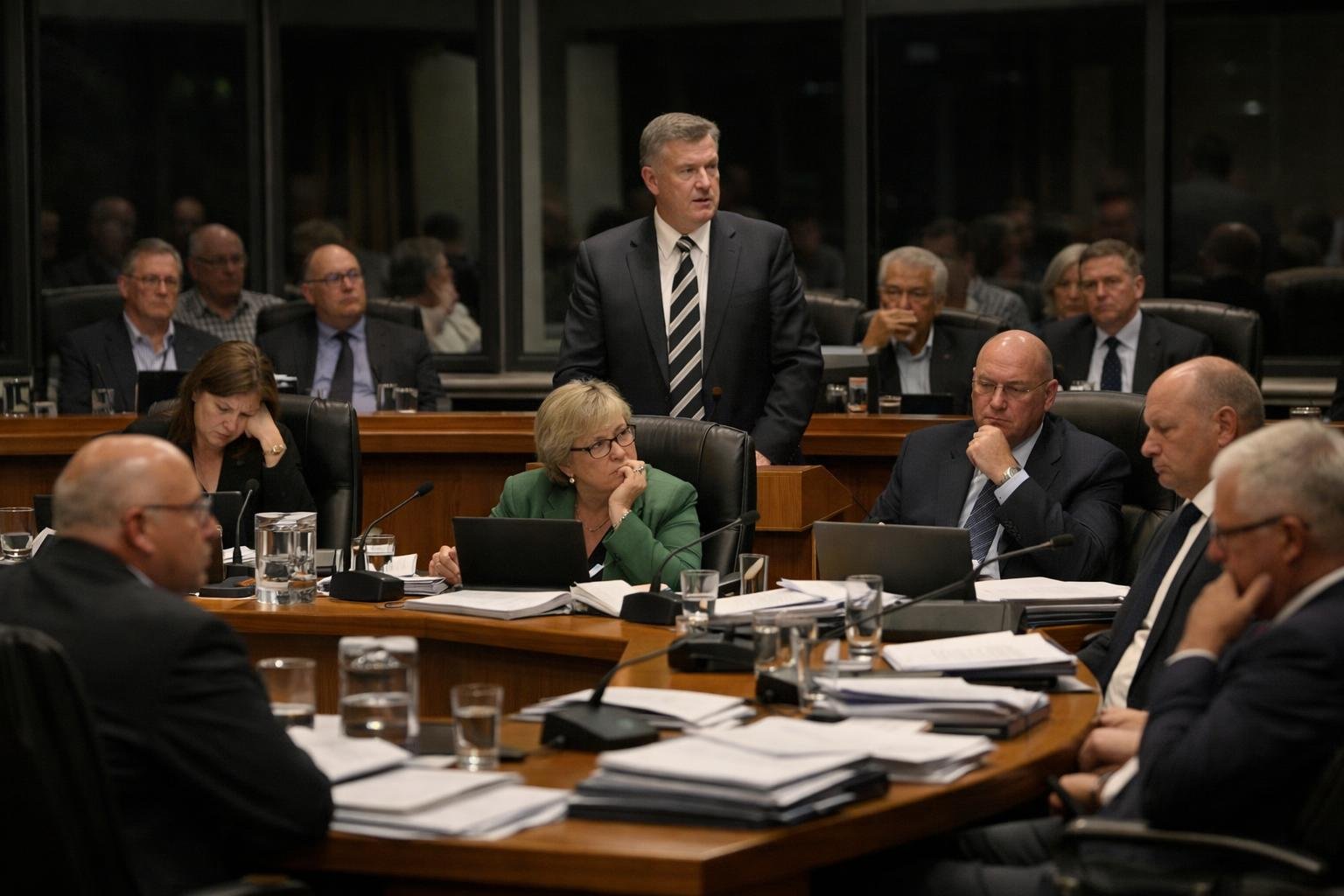
The chamber lights burned late, the debate ran hot, and the vote finally tipped just after midnight. After hours of clause-by-clause wrangling, councillors in the Garden City signed off on a new budget that promises steadier services, leaner spending, and a measured path through uncertainty. The margin was narrow, the mood was taut, and the message to residents was clear: every dollar must do a little more work this year.
Supporters framed the package as a pragmatic repair job, a way to keep roads open, parks green, and bins collected while inflation and construction costs refuse to blink. Detractors called it a missed opportunity, warning of heavier strain on families already juggling rising bills. Between those poles, a delicate compromise emerged, stitched together by amendments, side conversations, and the arithmetic of late-night governance.
A razor-thin margin after marathon debate
The final tally arrived with a hush, then a low rustle of released breath. “It’s a balancing act,” supporters insisted, arguing the plan protects essential services without tipping into reckless borrowing. Skeptics countered that “households are being asked to do more with less,” pointing to fee adjustments and trimmed program funding.
The meeting’s tempo swung between meticulous line items and big-picture philosophy. What kind of city does the community want to be in five years? Where should growth pay for itself, and where should council cushion the blows? On those questions, the room was split but not paralyzed.
What the spending actually targets
Under the adopted plan, the lion’s share still flows to the unglamorous spine of local life: roads, water, waste, parks, and community safety. Capital works lean into repair and renewal, aiming to stretch each asphalt and aggregate dollar. Operating budgets hold the line, with selective boosts for disaster readiness and asset maintenance.
One councillor, speaking to the palpable fatigue in the room, called it “a back-to-basics budget with just enough ambition to keep us moving.” Another warned that pausing or phasing cultural and event grants could leave a dent in the city’s social rhythm.
Rates, fees, and the household hit
For residents, the headline is a modest but noticeable change to rates and select charges. The council’s finance team stressed that increases were kept below the steepest cost pressures, anchoring adjustments to service delivery and asset upkeep rather than wish-list expansion. “We’ve shaved where we can and spent where we must,” one supporter said during the final debate.
Small business owners listening from the gallery heard mixed news. On one hand, a steadier pipeline of maintenance work may support local contractors. On the other, fees tied to compliance and waste could nibble at already thin margins.
The trade-offs spelled out
Even fans of the plan admitted the trade-offs were real, not rhetorical flourishes. Council pared back discretionary projects, postponed some noncritical upgrades, and tightened internal efficiencies to contain the bottom line. That approach buys time for larger reforms still under review.
- More funds to core maintenance and renewal, less to lower-priority expansions or new discretionary programs, with scrutiny on each project’s lifecycle cost and measurable community benefit.
Pressure points that won’t disappear
The stickiest questions revolved around long-term water security, regional road corridors, and the cost curve of heavy construction. Those aren’t single-year puzzles. They sprawl across forecasts, supply chains, insurance premiums, and rainfall that refuses to obey a fiscal calendar. “We can’t pave our way out of every problem,” a critic observed, urging sharper focus on demand management and resilience.
There were bright spots in the briefing papers: technology pilots to track asset conditions, a refreshed procurement lens to privilege local suppliers, and targeted reserves to buffer future shocks. None of it is a silver bullet, but together these settings hint at a more disciplined, evidence-led culture.
A council under strain, and a city watching
The tone across the chamber was intense yet largely civil, a reminder that civic work is both procedural and personal. Lines were drawn, then blurred, then redrawn as amendments rose and fell. “Compromise isn’t failure,” a supporter said afterward, “it’s how we keep the lights on and the streets safe.” Opponents, for their part, pledged to scrutinize each quarterly report and push for midyear adjustments if economic currents shift.
Community reaction, online and off, arrived swiftly. Ratepayers praised the focus on basics, then bristled at the pressure on family budgets. Sporting clubs cheered field maintenance but worried about facility upgrades slipping down the queue. The arts community asked what cultural vibrancy looks like when belts are tightened.
What residents should watch next
In the coming weeks, procurement notices will ripple through the local market, works crews will roll toward priority repairs, and a communications push will map out timelines by suburb and service. Residents should keep an eye on project dashboards, service alerts, and any public consultation windows tied to major capital decisions.
Two checkpoints loom on the horizon. The first is the early-year performance review, where efficiency promises meet operational reality. The second is the midyear budget update, the moment to correct course if revenue softens or costs overshoot their tracks.
By sunrise, the chamber was quiet again, papers stacked, chairs emptied, and a hard-won spreadsheet locked into the civic record. It isn’t a triumphal blueprint, nor a timid holding pattern. It is something sturdier and more familiar: a municipal bargain struck under pressure, judged not by the clatter of the vote but by the quiet results residents feel curbside, park-side, and kitchen-table side in the months ahead.