
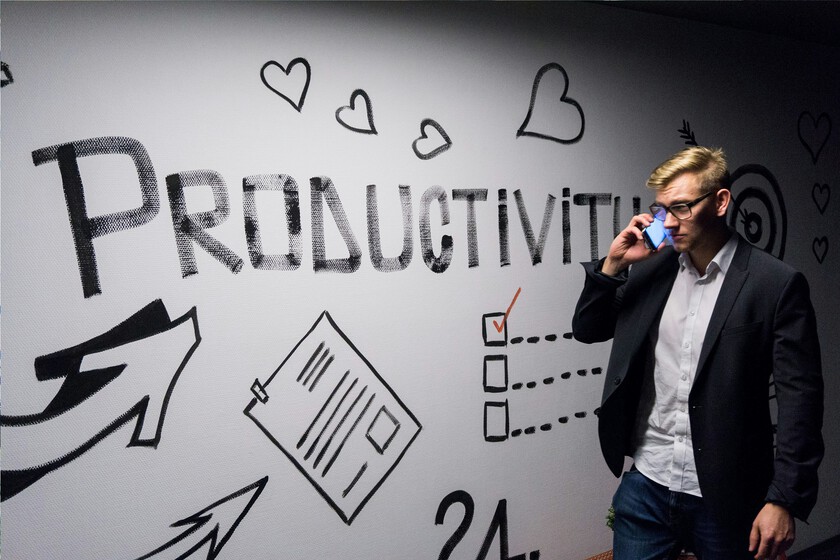
Cal Newport has spent decades obsessed with productivity. And yes, “obsessed” is the right word: a Georgetown University tenured professor of computer science doesn’t publish three books in less than six years unless he harbors an almost unhealthy fixation with the subject.
In short order, he became one of the field’s most recognizable gurus, with works such as Deep Work, Digital Minimalism, and A World Without Email appearing in airports around the world.
Then, one day, the lights suddenly came on.
What if all of this is just a vast charade? Newport doesn’t put it exactly that way, of course. But as you’ll soon see, the subtext has been there in much of what he has said in recent times. Behind the claim that we’re moving from “individual advice” to a “structural diagnosis” lies something else: a fundamental problem at the core.
What is real productivity, anyway? According to Newport, in factories or fields productivity could be measured, compared, quantified. Henry Ford, to name the most obvious American example, could justify the enormous investments his continuous assembly lines required because the numbers existed, because data could be produced and compared.
The trouble is that the world no longer operates in those terms. By the mid-20th century, knowledge workers became the most dynamic force in the economy, and measuring their productivity became far more elusive. To fix this, organizations took a shortcut: if I can see you working, I infer that you are productive.
Or, to borrow Newport’s framing, we have used a definition of productivity that amounts to nothing more than “the use of visible activity as a crude proxy for real effort.”
And then the pandemic arrived.
For Newport, COVID-19 was the turning point. The existential anxiety, exhausted workers, back-to-back Zoom calls, and the quiet quitting that followed—the world had spent years focusing on “performing the state of being busy,” and suddenly there wasn’t anyone looking over your shoulder. What we did no longer carried meaning in the same way.
Yet, as behavioral psychology teaches us, when something we routinely do ceases to work, our first reaction isn’t to stop doing it. It’s to double down—do it harder, more often, with even greater insistence. These six years have shown that path to be a dead end.
And so, what do we do next? Newport’s answer is crisp and rests on three principles: do fewer things, work at a more natural pace, and obsess about quality, value, and excellence.
If what we are doing has become a malignant stand-in that only ends up burning us out, the solution is to stop doing it. Newport calls this “slow productivity,” not only because, as he admits, he has a fixation with productivity, but also because, at bottom, it remains tethered to the same framework.
After all, who can realistically decide to work less? As Vivian Song has argued, Newport almost entirely leaves unanswered the question of accountability for those who design a culture of perpetual overwhelm. Or as Joshua Kim puts it, “slow productivity” is less a workplace strategy than a badge of privilege.
What makes all of this compelling is the diagnosis itself: the recognition—echoing from the very heartbeat of the management publishing industry—that what we are doing isn’t working. The next step is to take the problem seriously and to pursue a solution that actually serves everyone.
Image | Andreas Klassen
In Xataka | “Not doing anything” is a superb technique for boosting your productivity. Neuroscience seems to be clear on that point.