
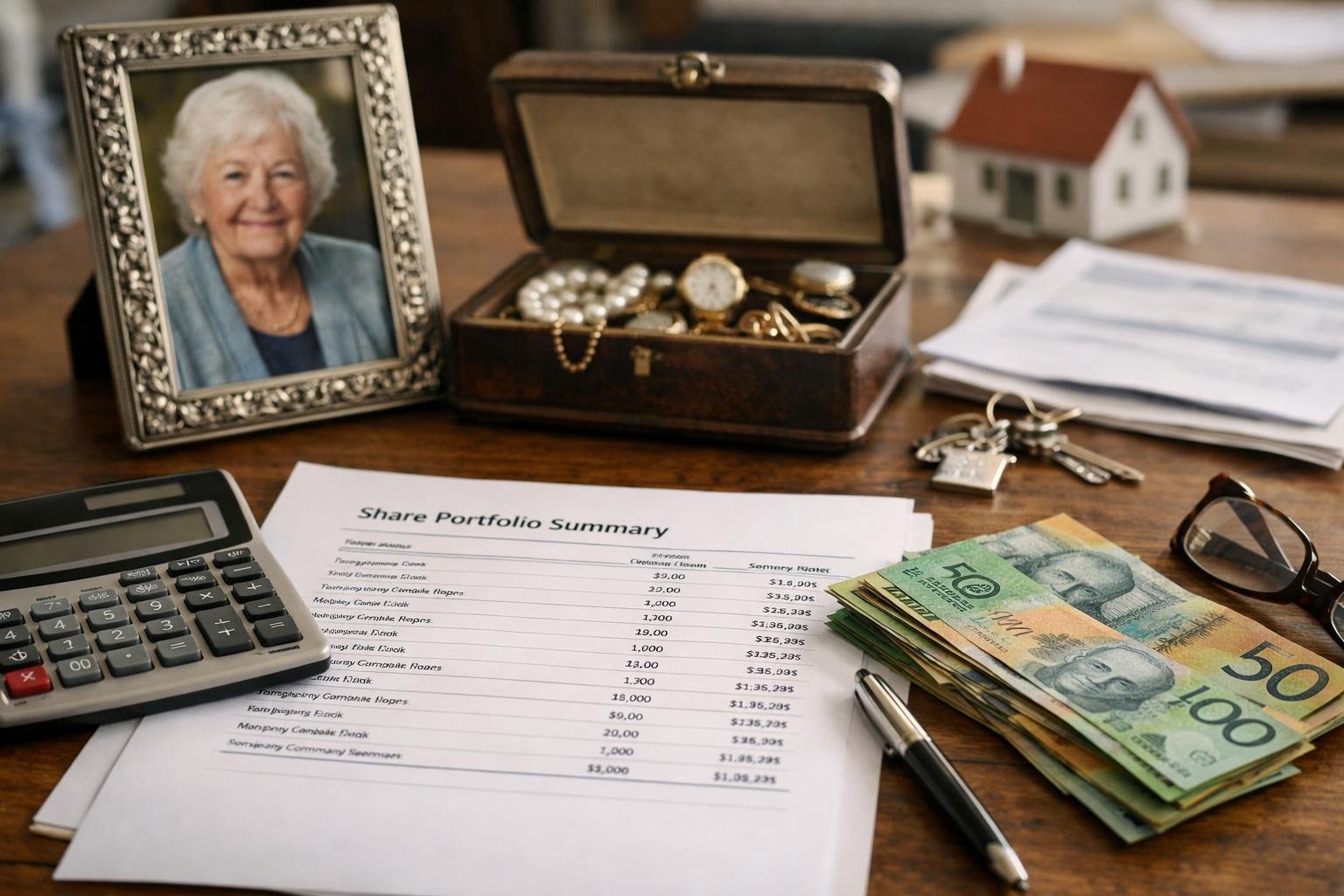
She kept her curtains neatly pinned and her receipts even neater. In a modest fibro home on a quiet Wagga Wagga street, an 82‑year‑old woman who never earned more than the minimum wage left behind a share portfolio worth $2.3 million. Her children, expecting a handful of keepsakes and a paid‑off sedan, opened a filing cabinet and found a lifetime of discipline stacked in manila folders: dividend statements, share certificates, and notes scribbled in her careful handwriting.
“She never talked about money,” her daughter said, “but she always said, ‘Make your dollars work while you sleep.’” It wasn’t drama or brilliance or a lucky win. It was decades of small, almost invisible choices that compounded into quiet wealth.
The life behind the numbers
She worked the checkout, the hospital laundry, the school canteen. She packed sandwiches with precision and knitted cardigans for church raffles with the same focus she later gave to her broker’s letters. She drove the same car for 19 years and collected jam jars “because glass lasts forever.” There were treats, never luxuries: a hot pie after Mass, a rose bush each Mother’s Day.
Her habits were simple rather than severe. “People think you’ve got to be miserly to save,” her son said. “Mum was generous—with her time, with her garden cuttings, with a spare roast potato on your plate. She just hated waste.”
A paper trail of patience
In the bottom drawer, under a tin of buttons, her children found the first dividend slip from the late 1970s. The handwriting was tidy: “Reinvest.” She joined dividend reinvestment plans (DRPs) and let the share registries do the invisible lifting. Every quarter, a few more shares arrived, then a few more again. She didn’t time the market; she outlived it.
There were blue‑chip names most Australians would recognise—banks, supermarkets, a telco, a miner, a healthcare giant—and a small clutch of industrial trusts. No tech fliers, no penny stocks, no options, nothing that needed fussing. Fees were circled in red pen with the note “too dear.” As one local adviser put it, “Her results were textbook: dividends, reinvestment, time.”
The engine that did the work
The numbers were powered by two forces: rising dividends and the reinvestment of those dividends. When companies lift their payouts over decades, each reinvested dollar begins earning its own dividends. It’s not magic, but it is relentless. Picture raindrops filling a barrel; at first you see nothing, then suddenly you have water for the whole garden.
She also benefited from being an owner in an economy that grew. Australia’s system of franked dividends helped, and so did the habit of ignoring headlines. She held through the ‘87 crash, the dot‑com bust, the GFC, and the pandemic’s sickening dip. “If they still sell bread and bank cheques,” she wrote in 2009, “I can wait.”
What her children actually found
There was no complex trust, no offshore anything, no secret account. Just a low‑cost broker, DRP forms ticked “Yes,” and a calendar with ex‑dividend dates in pencil. The portfolio was concentrated but sensible, diversified across sectors most households touch weekly. It wasn’t perfect, but it didn’t need to be perfect—it needed to be consistent.
Her record‑keeping was its own small masterpiece. Envelopes labeled “Tax,” “Fees,” “Keep,” and “Query.” Post‑it notes that read “Call registrar, ask about fractionals” and “Avoid hype.” On a bookmark: “It’s only a loss if you sell.” On another: “Pay yourself first.”
The lessons hiding in plain sight
The story tempts us toward myth, but the mechanics are mundane—and learnable.
- Spend less than you earn, automate what you can, hold for longer than feels comfortable, and let small advantages—low fees, franked dividends, DRPs—compound without drama.
A planner who reviewed her statements said, “There’s nothing exotic here. It’s a case study in behavior over brilliance. She picked good businesses, reinvested steadily, and stayed out of her own way.”
Not about deprivation
She took the train to the coast, mailed birthday cards with a pressed flower, and kept a biscuit tin for visiting kids. She volunteered at the op‑shop, learned her neighbors’ dogs by name, and bought a new kettle the day the old one leaked. “Wealth didn’t change her tastes,” a neighbor said. “She just slept well.”
Her children are keeping the house, the rose bushes, and a small ceremony she requested: plant a jacaranda and “don’t make a fuss.” The portfolio? They’ll take advice, pay the tax, and remember the real inheritance—habits that turn pay packets into ownership.
What this says about the rest of us
Not everyone can replicate a lifetime of steady markets, rising dividends, and the luck of living long enough for math to bend in your favor. Wages are tight, rents are high, and life throws the occasional curveball. But the raw ingredients—time, cadence, humility, and low costs—are available to more people than the headlines suggest.
She didn’t chase alpha; she embraced enough. She didn’t predict; she prepared. And she left a message in the margin of an old register—a sentence that, in the end, explains the whole thing: “If you look after the pennies, the shares will look after themselves.”