
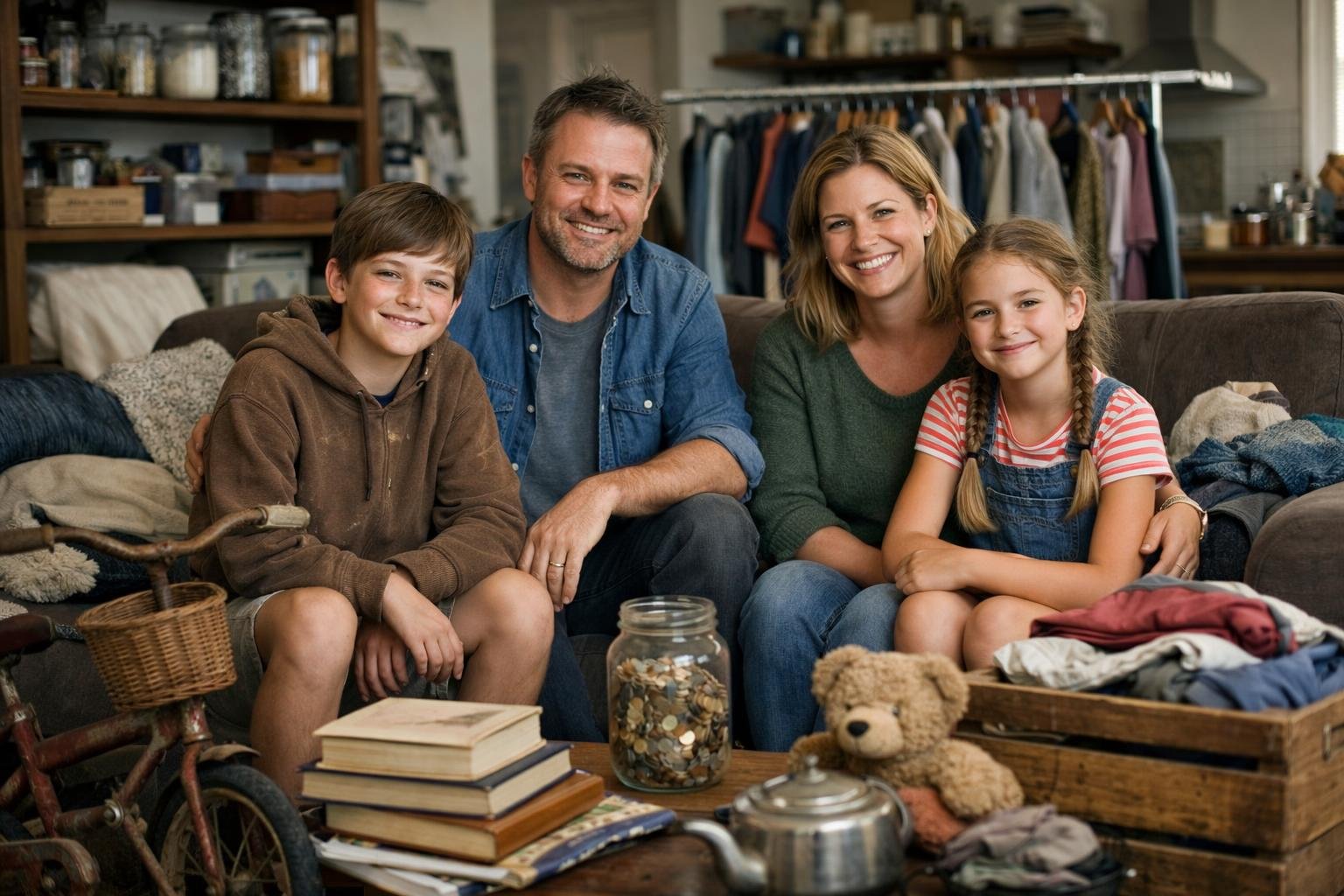
They live on a quiet street in Bendigo, where the gum trees lean into the afternoon light. Two years ago, the Larkin family made a stubborn decision: no buying anything new. Not clothes, not furniture, not gadgets, not even a toaster. What started as a dare between partners became a household ethos, one that rewired their habits, their calendar, and even their friendships.
They expected pushback. Instead, they found a strange freedom. “It felt like cutting a string we didn’t know was tied to our ankles,” said Emma Larkin, mother of two and patient tinkerer of broken appliances. “Less choice meant less noise, and somehow, more room for actual life.”
How it started
The spark was a budget spreadsheet that never seemed to make sense. Groceries were fine, utilities were predictable, but the line called “miscellaneous” was a monthly mystery. “We were buying things out of friction and habit,” said Tom Larkin. “A new hose because the old one kinked. Another set of mugs because a sale flashed in an email.”
One evening, after a frustrating scroll through sales, they wrote five words on a whiteboard: Buy nothing new for two years. The rule sounded absurd—and perfect. They posted it above the kettle, told the kids, and informed their friends. “We needed external pressure,” Emma said, “like announcing a marathon so you actually train.”
The rules they set
They wrote rules that were strict but workable. Food and medicine could be new. Services were allowed. Everything else had to be borrowed, repaired, or sourced secondhand through op shops, Buy Nothing groups, and weekend swaps. “We became detectives,” Tom said, “tracking down parts, tools, and people who knew how to fix what we’d normally replace.”
Bendigo turned out to be a treasure map. The Salvage Yard offered timber for a shelf. A neighbor traded a bike seat for sourdough starter. The local library of things loaned out a pressure washer that made the patio sing. “When you stop being a customer, you become a neighbor,” Emma said. “That feels like an upgrade.”
What changed at home
At first, the kids rolled their eyes. New sneakers? Not this year. Instead, they learned to patch, to trade, to check the lost-and-found at school. Screen time slid down as weekend repair sessions slid up. Tom learned to rewire a lamp; Emma figured out how to mend denim without it looking like a pirate costume.
Dinner conversations turned into inventories. “What do we already have?” became the nightly mantra. The house grew quieter. Fewer deliveries, fewer packaging towers, fewer trips to the mall. “Surprisingly, we felt richer,” Tom said. “Not with stuff, but with time.”
The accountant’s stunned reaction
They didn’t track every coin, but they kept a broad ledger. Clothes: down 88 percent. Homewares: nearly zero. Tech: only secondhand or repaired. When they finally sat with their accountant, Priya Shah, she clicked through the numbers and stopped. “I was speechless,” she said later. “Their discretionary spend had collapsed in the best possible way.”
Over two years, their savings account swelled by A$38,400, roughly a 42 percent drop in non-essential outgoings—money redirected to their mortgage, a small emergency fund, and a trip paid in cash to visit family they hadn’t seen since before. “They achieved what many households want,” Shah said, “a buffer that makes life less fragile.”
What they learned
They discovered the difference between need and itch. The itch passes in minutes; the need waits patiently. They learned that “new” often means unnecessary, and that patience is a discount in disguise. They learned to ask better questions: Does something like this already exist near me? Can I borrow it, can I fix it, can I do without it for a week?
There were slips. A plastic lunchbox got bought new during a chaotic school week. A gift card forced a new purchase. They wrote these into their story, shrugged, and kept going. “Perfection is a trap,” Emma said. “Progress is what pays.”
Try it for a month
If a full two years sounds impossible, try a month. Start with one room or one category. Make it a game, not a punishment. The Larkins suggest this simple playbook:
- Set a visible rule and share it with at least one friend
- Define clear exceptions so you don’t burn out
- Join local swap or Buy Nothing groups and introduce yourself
- Learn one repair skill this month—zipper, plug, or hem
- Track wins in a shared note so momentum feels real
A month might stretch into two, and two might become a new baseline. “Once you see how much less you actually need, it’s tricky to unsee it,” Tom said. “The world keeps telling us we’re lacking. We found we were already enough.”
On their front porch, a secondhand bench sits beneath a hand-built shelf of herbs. The basil is thriving, the rosemary is stubborn, the mint is doing what mint always does. Life hums at a slower frequency, yet nothing feels missing. And every so often, when the kids ask for something shiny, Emma smiles and asks, “What could we borrow first, or make with what we already have?” The answer, it turns out, is usually plenty.