
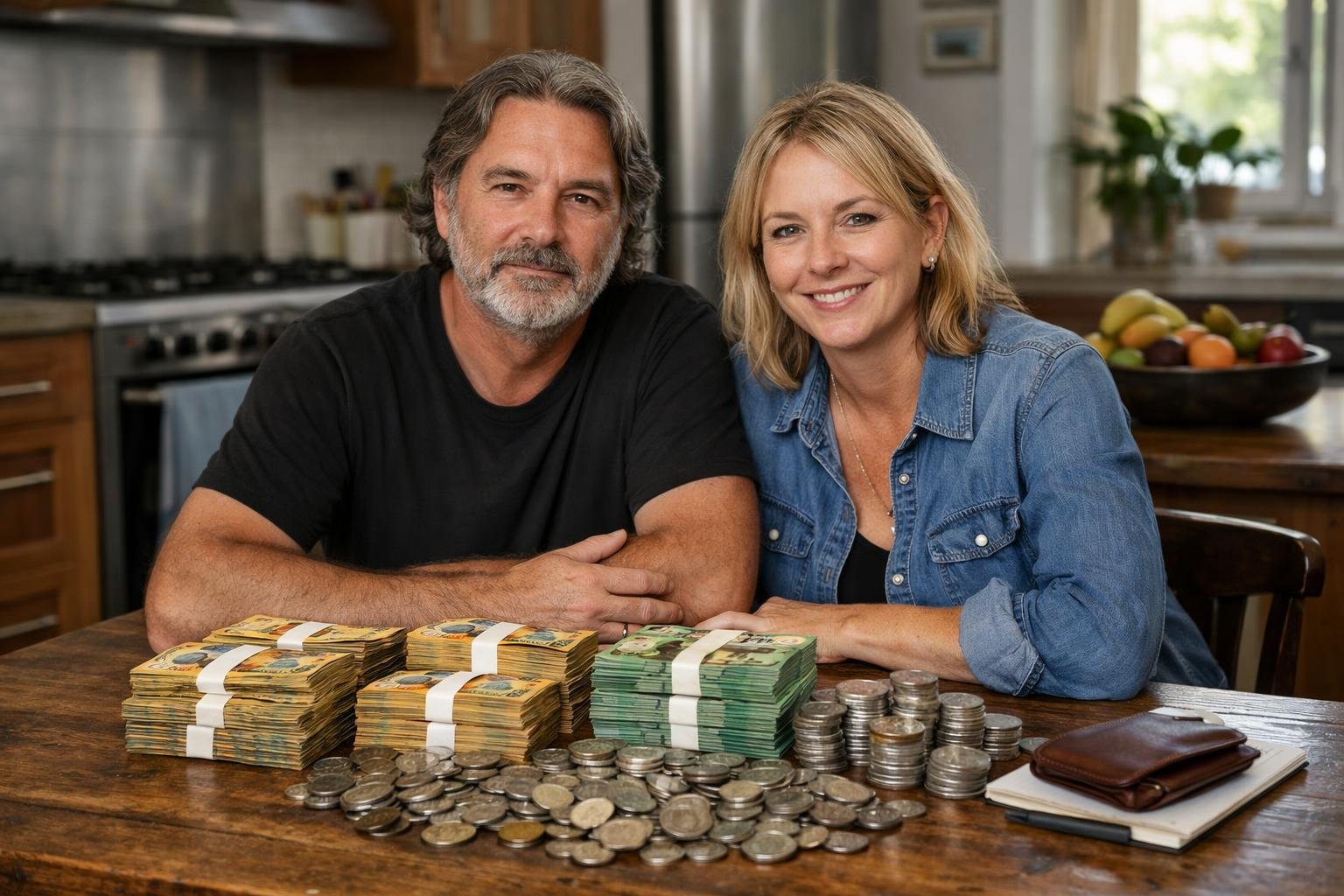
They live in a coastal city, but their finances are anything but adrift: a Wollongong couple has spent 12 years running a cash-only household, and they say it has put them firmly in control. They’ve stashed away more than $84,000, not through windfalls, but by removing everyday friction from overspending. “Cash makes you feel the decision,” they say. “We’ve never been more deliberate.”
They didn’t set out to be radical. It began with a season of mounting fees, missed autopay alerts, and the creeping sense that money was “happening to us.” One weekend they closed their last account, cleared recurring debits, and built a paper routine they’ve kept ever since.
Why they walked away from banks
The first push was psychological, not ideological: digital money felt too abstract. Taps blurred boundaries; subscriptions renewed silently; small leaks multiplied into stress. “We weren’t broke, we were just numb,” the couple recalls. They wanted constraints that felt real—a wallet that got lighter, envelopes that emptied, and choices they could touch.
They also resented “motivating” extras—reward points, buy-now-pay-later nudges—that made spending feel like a game. “We don’t chase points; we chase peace,” they say, summing up their shift in values.
How they make cash-only work
Bills are paid at the post office in cash using Billpay, with stamped receipts kept in a binder. Rent goes by cash receipt to a private landlord on the first Friday of each month. For rare online buys, they preload a single-use prepaid card with cash and delete it after the purchase. Travel bookings are handled with merchant gift cards bought at the supermarket.
Weekly budgeting rides on a classic envelope system. On payday they sort notes into labeled pouches: groceries, fuel, utilities, rent, medical, savings, and a tiny wild-card stash. “Every dollar has a job,” they say. “If an envelope’s empty, the answer is wait.”
- Their ground rules: one grocery trip per week; no splitting tills; big buys require a two-week cooling-off; receipts photographed and filed every Sunday.
A small fireproof safe at home holds sinking funds for annual costs like rego and insurance. They cap immediate-at-home cash and keep the rest off-site with a trusted relative, changing storage routines to lower risk. “Cash can be stolen, yes,” they add. “But so can your digital attention.”
The psychology of paper money
Counting notes is intentionally slow. That slowness creates friction, which in turn creates space. “Handing over cash has a little sting,” they say, “and the sting is the teacher.” When a category gets tight, they negotiate in real-time: downgrade a dinner, postpone a purchase, or swap a want for a walk.
The tactile ritual lowers their anxiety. No late-fee surprises, no ‘pending’ limbo, no mysterious merchant holds. “It’s calmer,” they say. “We decide, then we pay.”
Counting the savings
Their $84,000 wasn’t built on dazzling returns, but on avoided leaks. No account fees, no card interest, fewer indulgent extras, and better price awareness at the checkout. “Cash makes a sale feel like a story, not a signal,” they joke.
They also found room to negotiate more. Tradespeople often offered small cash discounts, and market vendors rounded down for exact change. The bigger lift came from fewer impulses: leaving cards behind meant fewer ‘might as well’ spends. Compound that over 12 years, and the pile grew visible.
Limits and trade-offs
Going bank-free isn’t frictionless. Renting without transfers narrows your options, and some services simply won’t accept cash. They accept that constraint as part of their design. “Constraints create creativity,” they say, but they also acknowledge risks: loss, theft, and limited consumer protections.
They mitigate with habits: segmented storage, insurance reviews, meticulous records, and refusing to carry more than a day’s spend. For emergencies, they keep a sealed envelope labeled ‘break glass’—fuel, food, motel cash—and a prepaid card for after-hours needs.
Could this work for you?
The couple doesn’t preach purity. “We’re not off the grid,” they laugh. “We’re just off the autopilot.” Their advice is to test the method, not the myth. Try cash in one category—say, groceries—for a month, log every receipt, and watch your patterns shift.
If all-cash is impossible, borrow its principles: fewer cards, lower limits, scheduled spending days, and clear, tactile checkpoints. Use friction to slow your spend, not your life.
After a dozen years, what they value most isn’t the balance, but the clarity. “We thought freedom meant access,” they say. “Turns out it meant boundaries.” And in their sunlit Wollongong kitchen, a row of humble paper envelopes still does the quiet, daily work.