
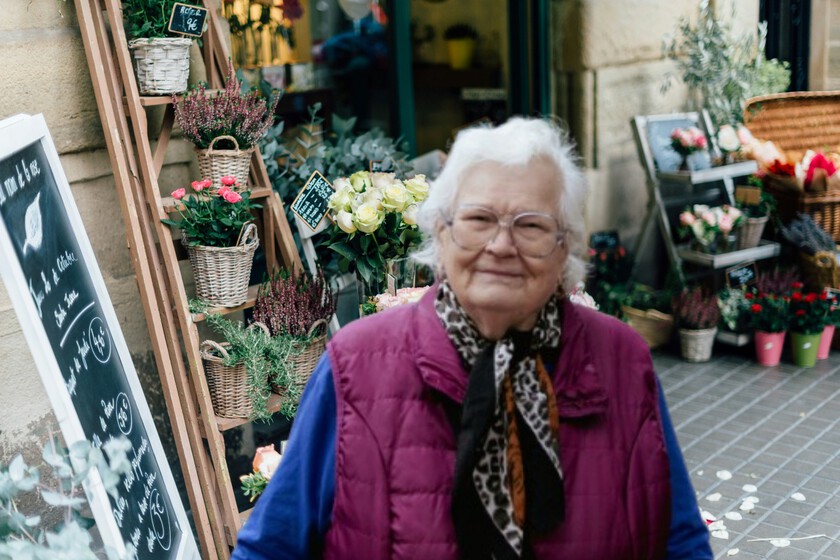
Numbers speak for themselves. Never, across the entire historical series, have there been so many self-employed workers in Spain.
The Special Regime for Self-Employed Workers (RETA) already surpasses 3.4 million affiliates. Yet this growth hides many subtleties and not all are positive. Local commerce continues to lose weight and thousands of traditional businesses disappear each year in our country.
Latest data show that, between June 2025 and June 2026, the number of self-employed people dedicated to commerce declined by 10,454, bringing the total to 652,319 professionals. Translated into daily activity, this means that around 29 shops stop operating each day.
A Sector Losing Ground
Commerce has historically been one of the pillars of self-employment in Spain. For decades, local neighborhood shops have contributed to creating jobs, wealth and social cohesion, in addition to offering a close service that is difficult to substitute. But in 2026 everything is different.
Small establishments must face a steady rise in operating costs, ever higher commercial rents, difficulties in finding generational succession, and growing competition from large digital platforms with very different structures.
From the Union of Associations of Self-Employed Workers and Entrepreneurs (UATAE), its general secretary, María José Landaburu, summarizes the problem, asserting that “the trade is losing the battle in silence, not because there is a shortage of will to work, but because competing against digital giants, impossible rents and rules designed for enormous operators leaves thousands of self-employed people out of the game”.
Regions with the Strongest Commercial Presence
Self-employed commerce maintains a strong foothold across virtually the entire national territory. Andalusia leads in the number of professionals dedicated to this activity with 126,725 self-employed workers.
Trailing are Catalonia, with 104,403; the Valencian Community, with 78,623; and the Community of Madrid, with 74,561. Together these four regions account for more than half of all self-employed people in commerce in Spain.
Galicia, the Basque Country, Castile and León, Castile-La Mancha, the Canary Islands and the Region of Murcia also stand out, where small commerce—despite its crisis—continues to be an essential element for the local economy and the life of many municipalities.
Much More Than a Store That Closes
The disappearance of a business affects not only its operator. Each closure implies the loss of a neighborhood meeting point, less economic activity in the area and a reduction of services for residents.
Traditional shops also provide security, keep streets active throughout the day and promote proximity shopping, generating a positive impact that goes far beyond the sales made.
In this regard, María José Landaburu warns that “we cannot celebrate employment records while it is accepted as normal that thousands of shops disappear; a country with more affiliates, but fewer neighborhood stores is a country that is leaving gaps in its streets and in its towns”.
What the Sector Is Demanding
From UATAE they consider it essential to launching a national plan that strengthens the competitiveness of proximity commerce through collaboration between the Government, autonomous communities and municipalities.
Among the proposed measures is a revision of the commercial regulation to ensure fairer competition, aid aimed at coping with rising commercial rents, digitization programs tailored to small businesses, administrative simplification and actions that support generational succession.
Furthermore, the organization calls for specific attention to municipal markets, rural commerce, street vending and artisan activities, considering that they play a fundamental economic and social role in keeping alive numerous neighborhoods and municipalities.
As Landaburu sums up, “local commerce does not ask for nostalgia, it asks for rules to be able to compete.” And she adds one final reflection: “if we let the market order everything, the result is already evident—less local commerce and more concentration in the hands of those who can sell from anywhere without sustaining the life of any neighborhood”.