
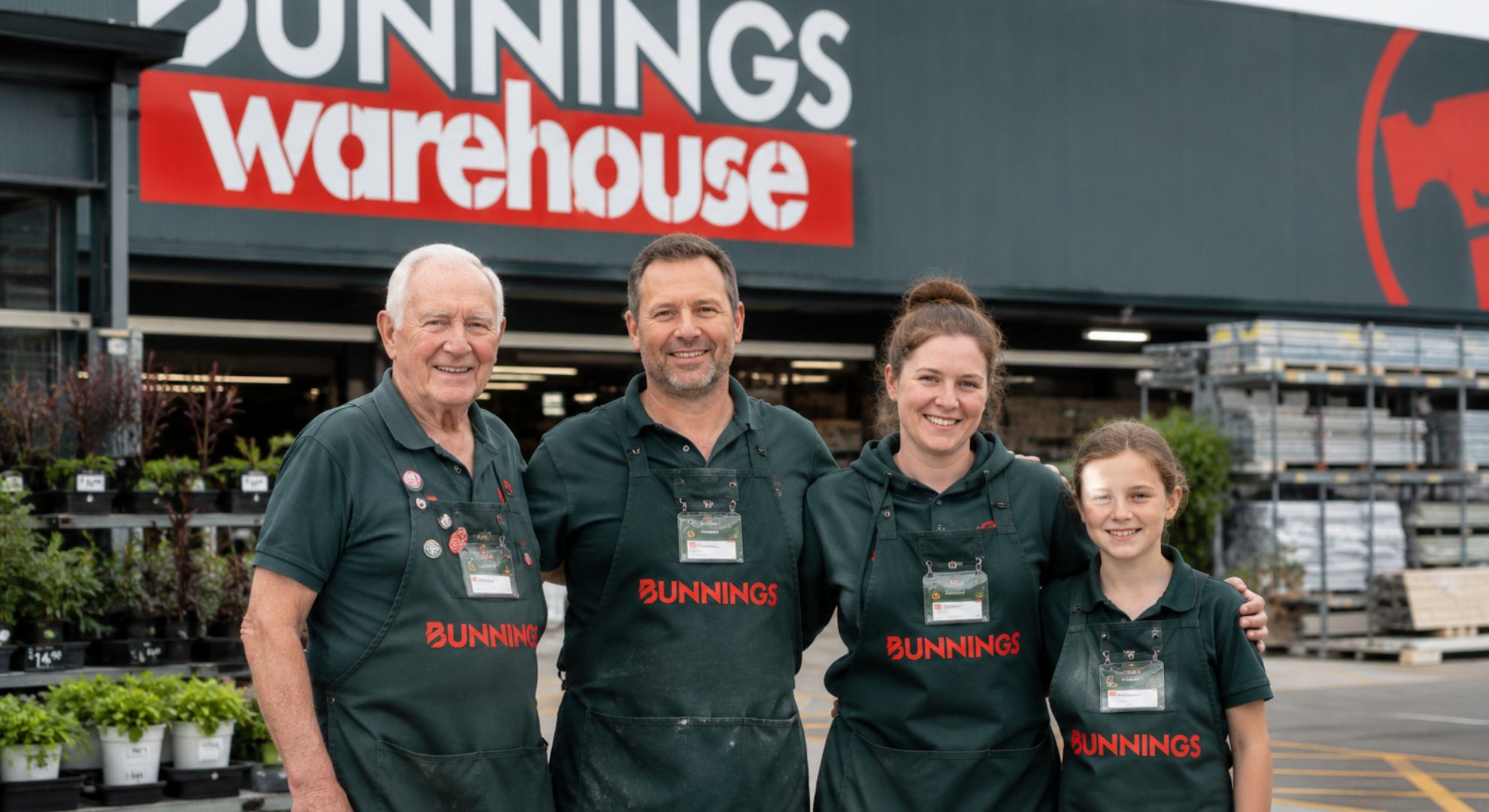
The smell of fresh-cut timber mixes with the sizzle of snags, and a quiet rhythm of footsteps on concrete marks the start of another day. On Brisbane’s northside, a green-apron crew waves to regulars, calling them by name. There’s a feeling here that retail can still be personal, that a hardware run can still matter.
Locals will tell you this place has a heartbeat, and that heartbeat has a surname. Four generations of the Kearney clan have taken the morning handover and closed the roller-doors, passing down keys and know-how the way others pass down recipes. “We don’t own the building,” says current manager Liam Kearney, “but we take ownership of the experience. That’s the part we guard like a family photo.”
Roots in the Aisles
It began when Michael Kearney, a post-war carpenter with sawdust in his cuffs, swapped building sites for the yard. He started on timber, counting lengths by feel. “He knew hoop pine like some people know handwriting,” Liam says with a grin. Promotion followed, then late nights with ledgers, and early mornings when pallets still fogged in the cold.
His daughter, Maureen, wore the green apron over pressed blouses and steel-caps, juggling rosters and school-runs. She learned every aisle and every supplier, how to pull a team together with a firm nod and a biscuit tin. “Mum could calm a Saturday rush with a whisper,” Liam remembers. “She had this way of making chaos feel tidy.”
Then came Patrick, Liam’s dad, who leaned into power tools and promotions, testing every drill until his wrists buzzed with torque. He started the Saturday skill demos, showing teenagers how to set a stud anchor, how to keep a blade true. “If someone leaves more capable than they arrived,” he’d say, “we’ve done the job right.”
What Changes, What Stays
Retail’s changed, Liam says, as he clicks through stock dashboards and signs for a pallet of mulch. Click-and-collect hums beside old-school advice, and workshop flyers share space with QR codes. Yet the family’s rules still fit on a staffroom noticeboard.
- Be genuinely helpful, not just busy; listen first, then suggest.
- Keep prices fair and explanations even fairer; no jargon shields.
- Treat tradies and DIYers with the same patience.
- Serve the community; the ledger must answer to the postcode, too.
“I tell new team members, ‘It’s not about selling a screw, it’s about solving a problem,’” Liam says. “The sale is a by-product of trust, and trust is a practice.”
Saturdays and Sausage Sizzles
You can map the neighborhood through the sausage sizzle roster. Junior footy clubs, bushfire relief crews, school P&Cs—each Saturday has a story on the tongs. “This place helped us raise for new jerseys,” says Tiana, a local coach, balancing a snag with extra onions. “Feels like the store is just part of the team.”
In the floods, the car park turned into a distribution hub, boxes of mops and masks stacked like a plywood skyline. Staff delivered to streets where utes moved through brown water, tapping doors with spare tarps and gloves. “You don’t clock off from a community,” Maureen told Liam on one of those nights. “You clock in again and again.”
There’s a bulletin board by the entrance with faded thank-you cards. Some dates are ten years old, the ink sun-bleached but the gratitude still loud. “We keep them up because people kept us up,” Liam says, smoothing a wrinkled corner with a thumb stained emerald from paint tint.
The Quiet Art of Knowing
Ask any floor teamer and they’ll tell you: the art is in the tiny recognitions. The retired engineer who always needs 10mm washers. The florist who buys masonry nails because they prefer the look. The dad who asks for “the usual deck stain,” and gets the can with last season’s tape mark.
“Retail can be scripted, but service should feel improvised,” Liam says. “The script is stock codes; the improv is the person in front of you.” A new apprentice wanders by, blushing over which heat gun to choose; a team member pivots, asks three questions, and lands the right tool with a smile. No fanfare, just a small act of precision in a big-box world.
Training for What Comes Next
Will there be a fifth generation? Liam shrugs, but the smile gives him away. His teenage twins stack paint chips in chromatic gradients, comparing “Stormcloud” to “Ironbark” with solemn authority. They work holiday shifts, learning that inventory is numbers and stories, both.
“I won’t force it,” he says, fingers drumming a counter nicked by a jigsaw. “If they choose this, I’ll hand them a set of keys and a long list of names to remember. If not, the store will still deserve someone who cares this much.”
He talks about solar on the roof, smarter stock algorithms, battery recycling bins filling faster than old skips. The future is digital, he agrees, but the handshake remains analog. “You can’t download a nod of understanding. You can’t stream a tin of precisely tinted gloss.”
Aisles as Family Album
As the light tilts through high windows, the timber aisle glows a warm amber. Staff radios crackle with gentle urgency, and somewhere a child squeals at a spinning display. The Kearneys have watched thousands of Saturdays bloom and fold, measured not in quarters, but in fences built and rooms painted.
“People come here before the big moments—a nursery, a first flat, a goodbye renovation,” Maureen once told Liam. “We sell the stuff, sure. But we also sell the start.”
Outside, someone flips onions on the barbecue, and the smell slips through the automatic doors. Inside, a customer points to a photo of a workshop pinned by the paint counter. Liam nods, reaches for a swatch, and writes a neat note. Heritage, in this place, isn’t something on a dusty shelf. It’s the steady hand that helps you find the right screw, right when you most need the thread.