
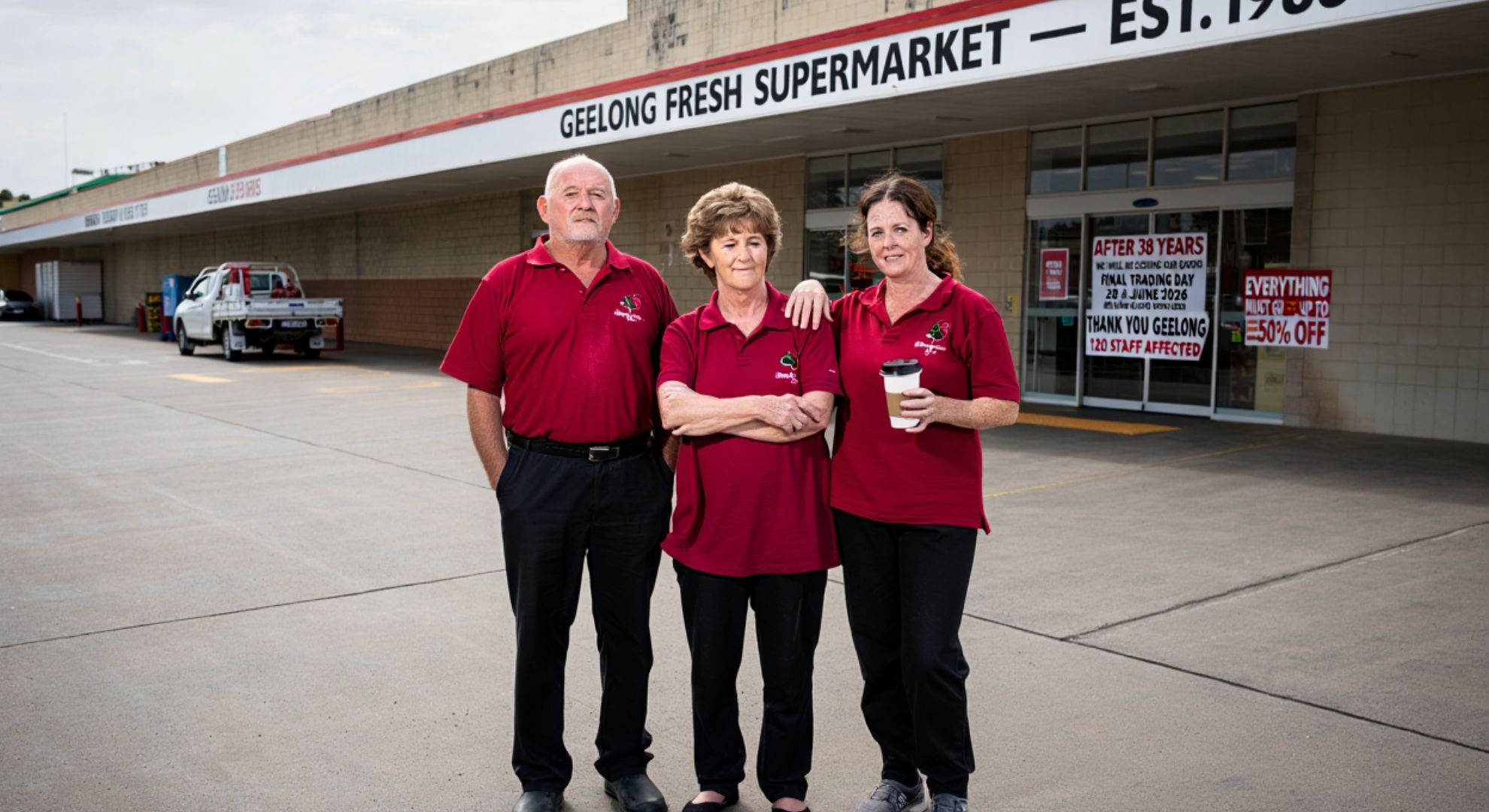
After nearly four decades of shopping baskets, weekly specials, and familiar faces, a pillar of Geelong’s retail life is preparing to switch off its lights. The long-running Coles at the heart of the suburb will close its doors, placing around 120 jobs in limbo and sparking a wave of concern from workers, shoppers, and nearby traders alike.
A landmark aisle goes dark
For many locals, this store has been more than a checkout and a car park. It has been a meeting spot, a dependable stop, and a symbol of neighborhood stability. “It’s the end of an era,” said one long-time customer, gazing at the fluorescent aisles that once felt endless on Friday nights.
Coles has cited a review of its store network and evolving shopping habits as it reshapes operations in a tighter and more competitive market. While online groceries and discount challengers surge, legacy locations can become harder to justify, even when their histories run deep.
What it means for workers
The most immediate human cost will be felt by the roughly 120 team members whose futures are now uncertain. Coles says it will explore redeployment options, offer transition support, and consult with staff in the coming weeks. “We will support our team members through this process,” a company spokesperson said, noting that nearby stores may absorb some roles.
Still, the mood on the shop floor is heavy. “This place paid my rent and saw my kids through school,” said one employee with more than a decade of service. “You build a second family here, and it’s hard to say goodbye.”
Local union representatives have urged clarity on timelines and entitlements, pressing for transparent communication and meaningful redeployment pathways. They argue that workers shouldn’t bear the brunt of shifts driven by broader economics.
Ripple effects for the community
Beyond the checkout lanes, the closure reshapes daily routines. Foot traffic that sustained nearby cafés, chemists, and small retailers could thin, especially on weekday mornings and after-work rushes. Elderly residents who valued the store’s accessibility—flat entries, familiar staff, and steady bus links—now face longer trips for basic groceries.
“I pop in three times a week for small shops,” said a retiree waiting by the trolley bay. “Losing that convenience is a real blow.” Local traders worry that fewer visits will translate into fewer impulse buys, putting pressure on already tight margins.
Why this is happening now
Australian grocery retail is navigating powerful headwinds. Cost-of-living pressures have sharpened price sensitivity, pushing shoppers to hunt for value and cut discretionary items. Discounters continue to nibble at market share, while e-commerce and rapid delivery reshape how and where people stock up.
In this environment, older stores with higher overheads or suboptimal layouts can become tough to keep profitable. Network reviews—painful as they are—aim to concentrate investment where growth is strongest, even when that comes at a steep local cost.
What shoppers can do next
In the short term, expect a measured wind-down: shelves consolidating, stock levels thinning, and loyalists making last rounds. Gift cards remain valid across the broader network, and Flybuys points carry on unchanged. For those balancing time, budget, and transport, a few steps can make the transition easier:
- Check nearby Coles and competing chains for comparable pricing and weekly specials to protect your budget.
- Consider click-and-collect or home delivery if transport or mobility is a challenge.
- Consolidate staple purchases into fewer trips, using a running list to avoid repeat journeys.
- Support neighboring small businesses where possible to help preserve local vibrancy.
The store’s legacy
Strip away the fluorescent lights and scanner beeps, and what remains is a tapestry of everyday moments: first paychecks, Saturday sausage sizzles, harried holiday rushes, and quick chats at the self-serve corral. “We watched kids grow up and come back as colleagues,” said a department supervisor. “That’s a history you can’t easily move or measure.”
Local leaders have urged calm while discussions continue, encouraging residents to keep spending locally and to look out for neighbors who may need lifts or help navigating new routines. “This is a tough change, but Geelong’s strength is its community,” said one council member. “We’ll adapt, and we’ll do it together.”
What comes after the last trolley
As the automatic doors slide shut for the final time, the site itself becomes a question mark. Redevelopment could bring fresh tenants, a reimagined retail mix, or an entirely different community use. For workers, the priority is secure, fair, and prompt outcomes. For shoppers, it’s about maintaining access, affordability, and a sense of everyday ease.
A supermarket is never just a place to buy bread. It’s a weekly ritual, a social thread, a quiet backdrop to life’s small but steady milestones. When one disappears, the community feels the gap—and begins the work of stitching something new in its place.