
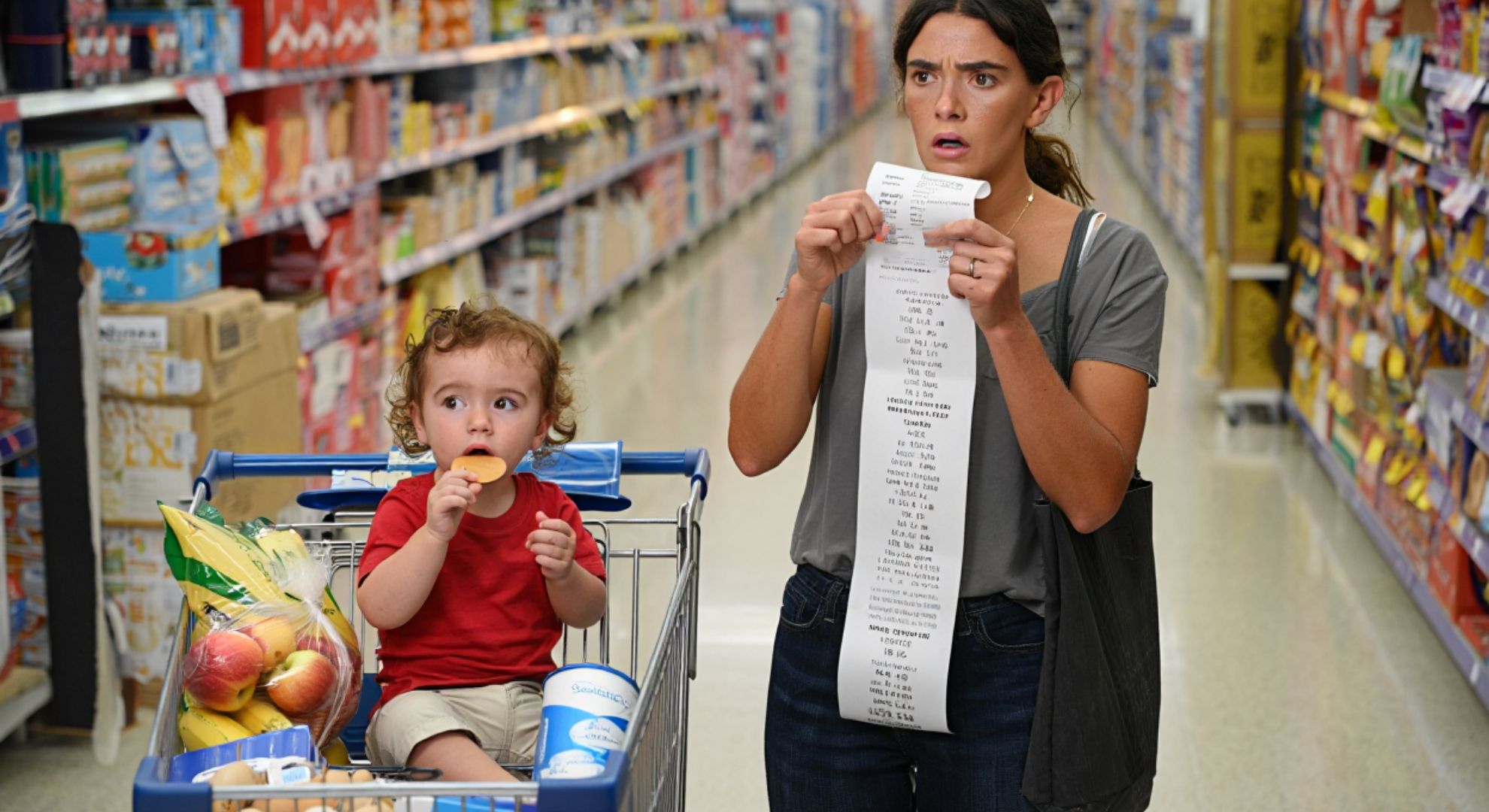
At the end of a long day, a Western Sydney mother studies her crumpled receipt in the car. The numbers look unfamiliar, like someone else’s weekly shop. Two years ago, the same staples cost half as much; today, the bill feels unreasonable. “I’m cutting things I once considered non-negotiable,” she says. “I can’t even afford the basics anymore.”
The weekly shop that keeps shrinking
On a good week, she buys bread, milk, rice, eggs, fresh fruit, and vegetables. On a bad week, there’s rationing: fewer apples, smaller yoghurts, cheaper cuts of meat. The trolley looks fuller, the pantry feels emptier.
She has two kids, a partner who drives early shifts, and a mortgage that climbed with rates. Grocery day used to be routine; now it’s a tactical operation. “I plan across three stores and watch the flyers like a hawk,” she says, “but the total still jumps.”
Sometimes she considers a fourth stop, chasing specials across suburbs. Then she calculates the petrol, the time, and the bedtime meltdown that follows. “You save two dollars on chicken and spend three on fuel,” she says. “It’s a losing game.”
How a basket turned into a bill
Her old list hasn’t changed much, but the economy around it has. Weather extremes hammered farms, fuel prices spiked transport, and global shocks squeezed fertiliser, packaging, and freight. Every step from paddock to checkout got more expensive.
At the same time, supermarket promos shifted. “Specials feel sneakier now,” she says. “It’s on ‘sale,’ but the regular price was hiked last week.” The unit label becomes her compass: grams per dollar, litres per cents. A family shop turns into maths homework.
Then there’s shrinkflation. The chip bag is airier, the cereal box narrower, the sliced ham thinner. “You pay the old price and get a little less,” she says, “until a sandwich needs an extra slice.”
What changed inside the trolley
She opens her notes app and lists the quiet switches that nudged the total up.
- Fewer brand names, more home-brand basics, but some “budget” lines quietly vanished
- Swapping fresh berries for frozen, then frozen for canned, then sometimes for nothing
- Bulk buying rice and pasta, but losing out when storage space is tight
- Meat once a centrepiece, now stretched into stews, patties, and lentil-heavy meals
“I’m not chasing luxury,” she says. “I’m hunting stability. It keeps moving.”
The emotional maths of the aisles
Every small choice carries noise: the kid who wants strawberries, the lunchbox that needs protein, the teacher’s note about allergies. She’s measuring nutrients against prices, and then against guilt.
“I used to grab blueberries without thinking,” she says. “Now I weigh them like jewels and put them back.” The checkout beeps sound accusatory. The cashier smiles, and she feels seen and also a little exposed.
There’s a private shame to running numbers at the register. A quick mental audit: which items can return to the shelf without a small person crying later? She has become fluent in the language of trade-offs.
Small tactics, thin margins
She meal-plans with ruthless clarity: build around what’s on special, repeat the same five dinners, freeze whatever can be stretched. A Sunday cook-up turns mince into sauce that feeds three nights.
Store-brand baked beans. Discount-bakery loaves. The end-of-day markdown sticker that feels like permission. “You learn to treat food like a budget, not a mood,” she says. Joy becomes a line item labeled ‘maybe’.
There are wins. A neighbour trades lemons for eggs. A community group shares tips on apps and clearance times. A chest freezer from Marketplace pays for itself in two months. But every tactic takes time, and time is also money.
Why it feels personal, even when it’s systemic
In Western Sydney, long commutes collide with early shifts, high rents, and expensive childcare. When groceries climb, they squeeze the only flexible part of the budget. “You can’t renegotiate your mortgage at the checkout,” she says. “You just buy less.”
She’s not angry at the teen bagging bread; she’s wary of structures she can’t see. Market power, supply-chain fragility, energy costs baked into everything. The explanations make sense, but they don’t lower tonight’s total.
What relief could look like
She wants unit pricing that’s bigger and honest. Clearer labels on downsized packs. Real competition that rewards loyalty with prices, not points that feel like confetti.
Targeted vouchers for school-lunch essentials. Energy relief that shows up on the bill, not in brochures. Better public transport so she isn’t paying with her tank to chase a five-dollar saving.
On the drive home, she looks at the receipt again. The numbers won’t blink first. “We’ll make it work,” she says, more hope than certainty. In the back seat, the kids argue about yoghurt. Tomorrow’s list is already writing itself.