
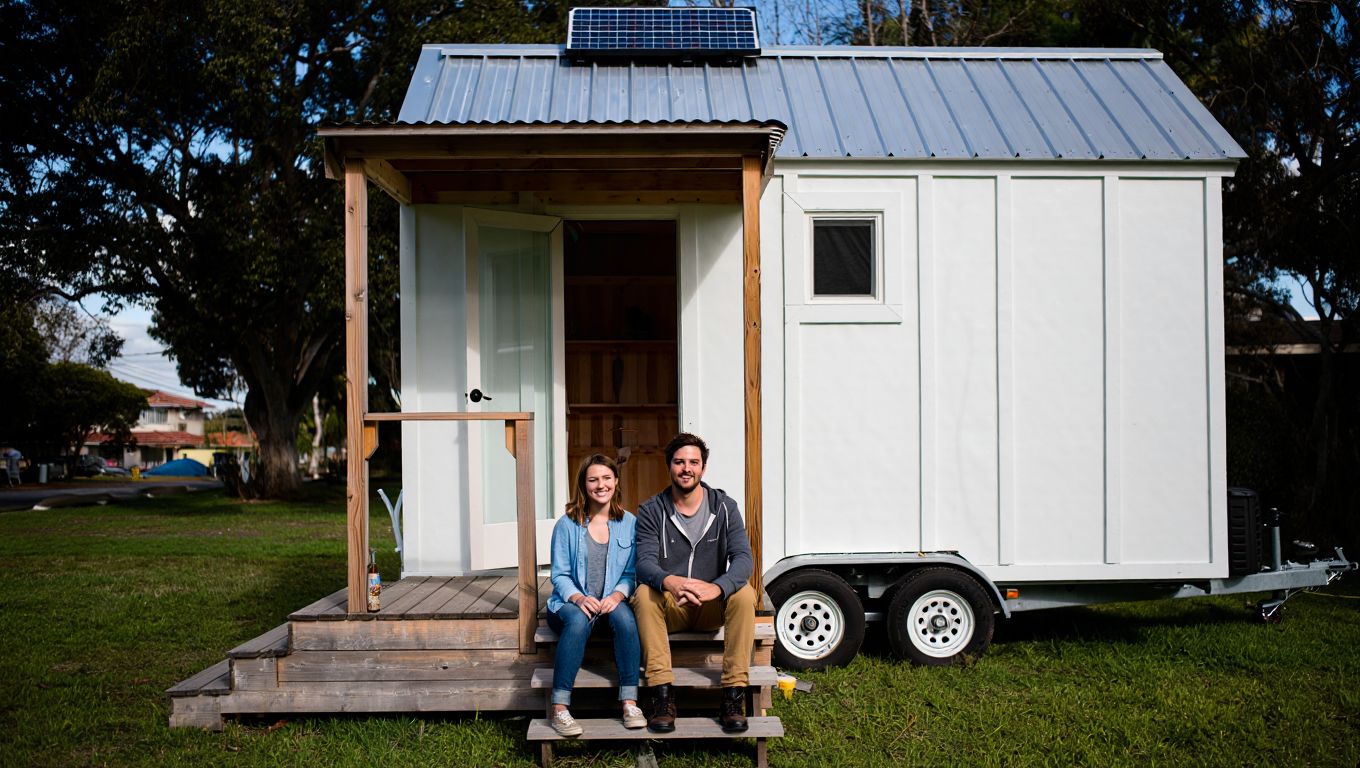
They were tired of paying for a place that would never be theirs. In Geelong, where rents keep creeping up, a young pair decided to try something different. Over 14 months of weekends and weeknights, they pieced together a tiny home on a trailer—compact, bright, and cleverly laid out—spending under AUD 40,000 from first sketch to final screw.
“We felt like tenants of our own lives,” they said. “So we picked up a drill instead.”
Now they wake up to coastal light, brew coffee on a two‑burner stove, and watch the gumtrees sway beyond a porthole window. The big surprise? Their monthly housing cost is effectively zero. “We live rent‑free,” they said. “It’s calmer than we ever imagined.”
Why a home on wheels
Mobility meant freedom. They didn’t want to be locked to a single postcode, nor battle a mortgage for the next three decades. Putting the house on wheels kept options open: they could lease a little patch on a friend’s acreage, reposition for work, or tow the home for a long holiday.
“Rent felt like a treadmill,” one of them said. “A trailer felt like a key.”
Designing for less than 40k
They began with a tight spreadsheet and a stricter vision: no wasted space, no ornament without purpose. The frame is timber, insulated with rigid foam, and wrapped in corrugated steel. Their splurges were strategic—double‑glazed windows for efficiency, a compact stove, a fold‑down deck that doubles as outdoor dining.
By reusing materials—think recycled hardwood benchtops and a salvaged sink—they trimmed thousands from the budget. “We hunted Facebook Marketplace at 10 p.m., then drove at dawn for bargains,” they laughed.
Building nights and weekends
They weren’t carpenters. YouTube became their late‑night teacher, and friends rolled up with impact drivers, pizza, and good advice. On Saturdays they framed walls; on Sundays they ran wiring and stapled insulation until the light faded.
A few jobs needed pros. A licensed electrician signed off the system, and a plumber helped with the hot‑water setup. “We learned to say, ‘This we can learn, that we should hire,’” they said.
Living light, living better
Inside, the footprint is small, but nothing feels cramped. The kitchen stretches along one wall with deep drawers that swallow everything. A ladder slides to the loft bed; beneath sits a cozy sofa that tucks extra blankets and a fold‑out desk.
The bathroom is pocket‑sized yet practical: a compact shower, a water‑saving sink, and a composting toilet that slashed costs and water use. Smart ventilation keeps things fresh, while a skylight pools the loft with daylight and star‑speckled nights.
Off‑grid without the drama
Power comes from a modest solar array feeding a lithium battery bank. In winter, a tiny wood heater sips kindling and warms the whole space. A rainwater tank and simple filtration keep taps running, and greywater irrigates a neat herb garden.
“Off‑grid sounded extreme, but it’s actually quiet,” they said. “You learn what you really need, and it isn’t much.”
What surprised them most
They expected the build to be hard. What stunned them was the community. Older neighbors offered an extra ladder and measured twice; a local metalworker trimmed the trailer brackets for a six‑pack and gratitude. “People love a project,” they said. “They wanted us to finish.”
They also didn’t expect the peace. Fewer objects, fewer bills, fewer obligations on the calendar. “We traded Netflix for nails,” they joked. “And then we found we didn’t miss either.”
Costs that matter, costs that don’t
They learned to pivot. When window quotes spiked, they changed the layout to standard sizes. When cedar cladding stretched the budget, they stained corrugated steel and loved the industrial‑meets‑cottage look. Money went where it had impact—insulation, windows, and a dry, solid trailer—not into fancy taps or designer tiles.
“We built for how we live, not how Instagram looks,” they said.
Five lessons for aspiring builders
- Start with a detailed budget, then cut 10% and add a 10% contingency. Buy the trailer and windows first; the rest can flex.
Where they park, and what’s next
They lease a small pad on a friend’s property just outside town, trading garden help and weekend barbecues. The arrangement is simple, legal, and friendly; they checked local rules and kept the build within road‑legal limits. “We didn’t want a grey area,” they said. “Paperwork gives you real freedom.”
Next year, they’re planning a slow loop down the coast, parking near surf and workshops, maybe running open‑house Sundays for curious locals. “We’re not anti‑house,” they said. “We’re pro‑options.”
On a recent evening, they stood on the fold‑down deck, feet dusty, mugs warm, gulls drifting in and out of view. The home behind them held exactly what they needed—no more, no less—and the road ahead felt newly, wonderfully wide.