
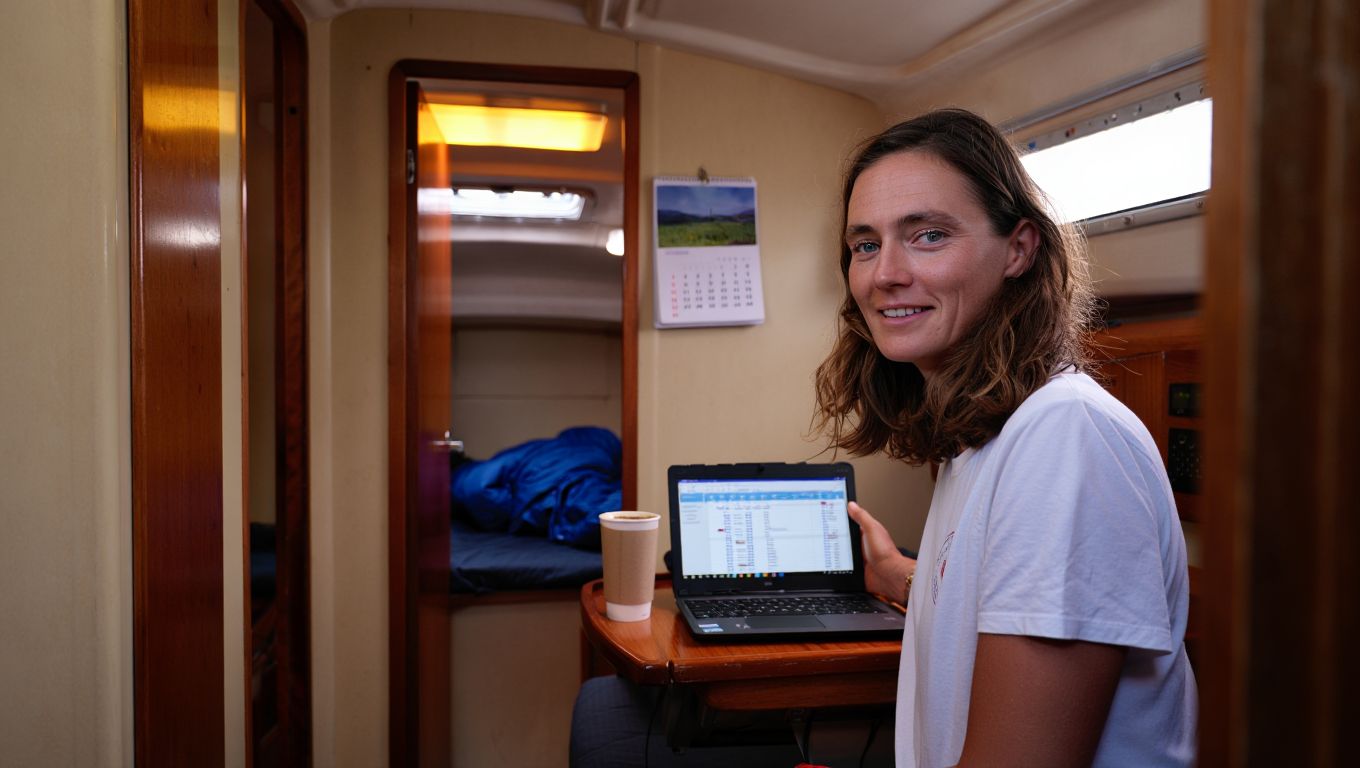
She traded fluorescent lights for sunrise, and the swap changed everything. What began as a side-daydream became a plan, then a departure, and finally a life that fits in thirty-foot of fiberglass and rope. “I swapped commutes for currents,” she says, grinning over a steaming mug on the companionway steps.
The leap from office to ocean
The decision wasn’t rash; it was stacked slowly from spreadsheets, savings, and late-night lists. She sold furniture, pared down clothes, and learned to tie more than one kind of knot with more than one kind of courage. “It felt like stepping off a pier,” she admits, “but the water was exactly where I wanted to be.”
Counting the costs
The financial shock came in the best possible way: her monthly outgoings slipped below what friends spend in a single week. Perth rents were climbing, while the ocean was simply there, big, blue, and mostly free. “I don’t pay for parking, I pay for tides,” she jokes.
Here’s a typical month, in AUD, trimmed and tidy:
- Mooring or anchorage fees: $0–$180, depending on where she stays
- Fuel and propane: $30–$80, kept low by sailing
- Groceries and basics: $200–$300, heavy on beans and fresh veg
- Maintenance fund: $100–$150, because boats demand respect
- Data plan: $40–$60, enough for work and weather
- Insurance: $50–$90, peace of mind in a policy
No gym membership, no train pass, no Uber-to-nowhere on a Friday night. When your living room is a cabin, temptation is mostly a distant shoreline.
Learning to live small
Downsizing is part arithmetic, part alchemy. Every object must earn space: a pan that nests, a book that teaches, a jacket that cuts wind and rain. “I kept a few heirlooms,” she says, “but I traded the rest for horizon.”
Power comes from solar, topped by wind on blustery days. Fresh water is precious, so showers turn mindful. Storage gets inventive: potatoes in the bilge, lines coiled like script along the rails.
Work that floats
She didn’t retire; she re-wired. A patchwork of remote contracts, a handful of marine photography gigs, and the odd deckhand shift stitch together a modest income. The laptop runs off 12-volt, the hotspot hums, and deadlines drift on a tide of emails.
“When the wind is fair, I move; when it’s not, I focus,” she says. Work blocks are sprinty, then the anchor drops, and she cooks lentils with cumin while the world turns pearl outside.
Community between anchors
The liveaboard crowd is patchwork—retirees with kind eyes, salty soloists with tidy decks, couples arguing softly over charts. They swap tools, trade weather intel, and sound an alarm if an anchor starts to creep. Kindness travels fast on the water, and gossip even faster.
“I’ve never felt so independent, and yet so held,” she says. A neighbor once dove for a lost mask; she later fixed his stove with a borrowed wrench.
Storms and other teachers
Not every day is glossy. Squalls can rattle bones, and a failed bilge pump will rearrange your priorities at midnight. “Fear is a good coach,” she says. “It makes you check knots, check weather, and check your ego at the hatch.”
Loneliness visits like fog, soft and thick. She radios a hello, calls a friend, or rows ashore for a walk among gum trees, pockets full of quiet and grit.
More with less
On land, she chased more square meters, more stuff, more speed; afloat, she chases tide windows and a good set on the hook. Money stretched, time widened, and the days started tasting like salt and freedom, with notes of coriander and diesel.
“I realized my real luxury is unbroken sky,” she says. Two mugs, one pan, a thousand waking colors between dawn and the first breeze.
How she makes it add up
She buys used parts, plans passages to save fuel, and does nearly every repair she can reach. Weather study beats hurry; a clean bottom beats complaining; and a well-stowed anchor beats a second alarm. When a line frays, she learns a new splice and an older patience.
The boat isn’t an escape so much as a mirror: everything you postpone comes back with extra wind. Pay attention, or pay later.
What’s next
Her charts are dotted with dreams: Rottnest in autumn light, a meander up the Coral Coast, maybe a patient hop to warmer islands when skills feel seasoned. “I’ll go as far as my competence carries me,” she says, “and one mile further, very slowly.”
For now, the budget stays lean, the days stay bright, and the boat keeps teaching. In a world that shouts for more, she has found a softer answer: enough wind, enough water, and enough time to feel each small thing fully.