
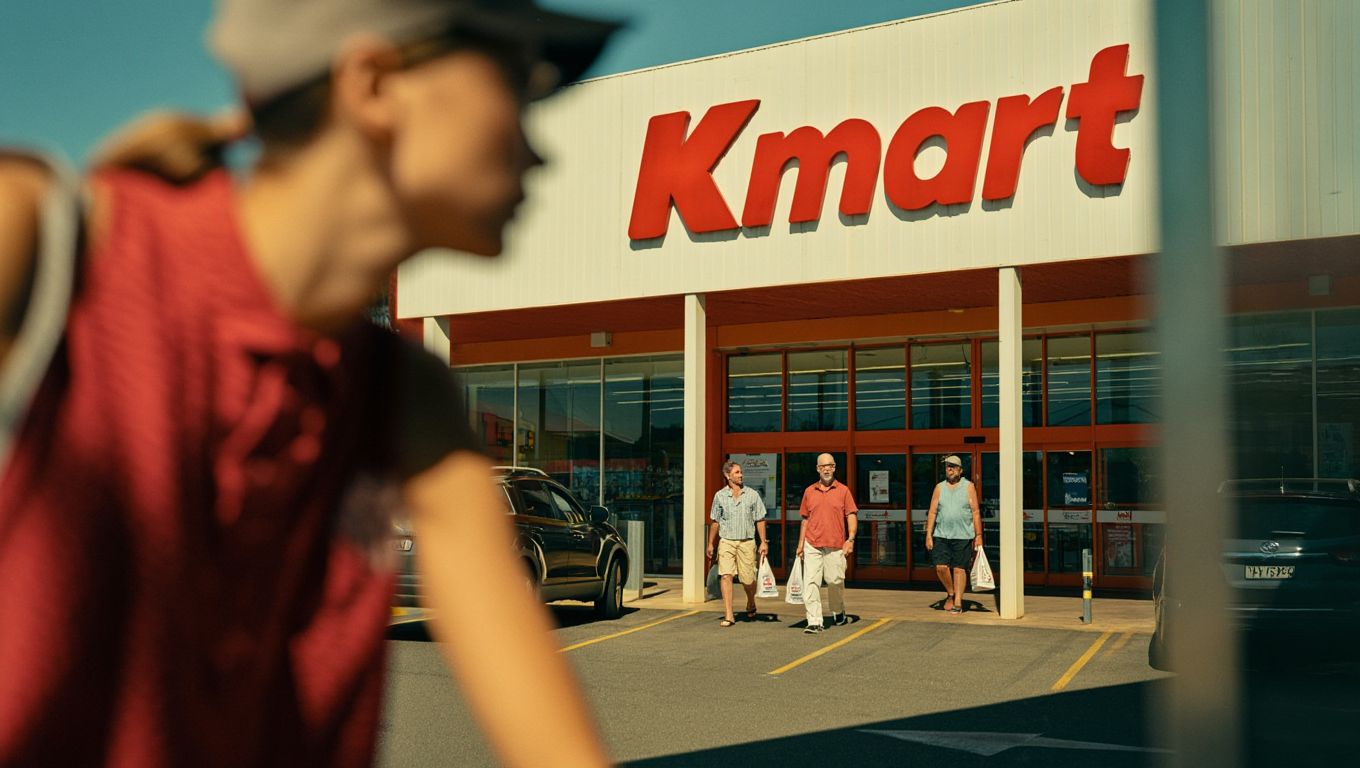
Kmart will wind down several outlets in regional Queensland before the calendar year closes, a move that underscores the pressures reshaping Australia’s retail landscape. The decision affects dozens of team members, while communities brace for change as anchor tenancy patterns shift.
The decision and the timeline
The company says the stores will trade through the coming months, with closures staged toward the year’s end to minimize disruption during peak shopping periods.
A Kmart spokesperson said the retailer had “reviewed its network to ensure sustainable operations,” adding that “we do not take store closures lightly, and our priority is our people and customers.” Exact locations are expected to be confirmed on a rolling basis as lease and centre discussions conclude.
Impact on staff and local communities
Kmart has advised that affected roles number in the dozens, with some opportunities for redeployment to nearby Kmart or Target stores where feasible. “Every team member will be supported through this transition,” the spokesperson said.
Union representatives have called for clarity on entitlements and timelines, urging the retailer to “move with speed and fairness.” A regional councillor noted that “when a major chain leaves, the ripple effects can be real,” from lost foot traffic to reduced casual shifts across a centre.
Kmart has outlined a package of supports designed to help employees bridge the gap to their next opportunity, including financial and career assistance.
- Redeployment options to nearby Kmart/Target stores, with priority consideration and paid relocation where eligible
- Access to Employee Assistance Program for confidential wellbeing and financial counselling
- Redundancy and leave entitlements in line with legal and enterprise agreements
- On‑site transition workshops, résumé coaching, and interview training
Why the retailer is recalibrating
Analysts point to a trifecta of pressures: softer consumer spending, rising operating costs, and the accelerating shift to online. In regional catchments, inconsistent footfall and higher logistics overheads can squeeze margins that once felt reliable.
Kmart has previously leaned on network optimisation, using smaller formats, remodels, and marketplace investments to sharpen price and availability. Where stores no longer meet trade expectations, closing or consolidating locations becomes a defensive—and sometimes necessary—step.
What this means for shoppers
Customers should expect clearance activity as stock is wound down, with regular store policies applying until the last day of trade. Gift cards remain valid chain‑wide, and returns can be handled online or at the nearest operating store after closure.
Click‑and‑collect orders may be rerouted to alternative locations, while home delivery continues unaffected. Centre managers are working to fill upcoming vacancies, aiming to preserve choice and convenience for locals.
The regional ripple effect
When a department‑style anchor exits, smaller retailers can see a dip in incidental spending, especially for fashion, food, and impulse categories. “When an anchor leaves, the whole centre feels it,” said a nearby café owner, who worries about weekday lunchtime trade.
Regional towns often rely on a handful of anchors to sustain regular visitation and keep tenancy costs steady. Re‑leasing a large box can take time, though landlords increasingly court health, education, or entertainment operators to rebalance the mix.
How Kmart frames the path forward
The retailer emphasizes that its everyday‑low‑price model remains intact, with investment in supply chain improvements and digital capabilities. “We’re focused on serving customers where and how they shop,” the spokesperson added, flagging ongoing upgrades to product ranges.
For impacted teams, the near‑term focus is certainty: mapped redeployment options, written timelines, and well‑signposted access to support. “Workers deserve clarity and fair choices,” a union organiser said, urging rapid one‑on‑one consultations.
Signals for the broader sector
The retrenchment in regional formats echoes a wider pattern across Australian retail, where mid‑box chains prune underperformers as consumer habits fragment. Hybrid models—smaller stores paired with click‑and‑collect and rapid fulfilment—continue to gain traction.
For shoppers, the message is mixed: fewer physical aisles in some postcodes, but faster digital experiences and broader online assortments. For workers, the priority is transition, backed by strong entitlements and real opportunities to stay in retail.
As the year heads toward its final quarter, communities will watch how centres adapt, how quickly new tenants arrive, and whether promised staff supports deliver on their stated aims. The coming months will test how well retailers, landlords, and councils can coordinate a smooth handover to whatever comes next.