
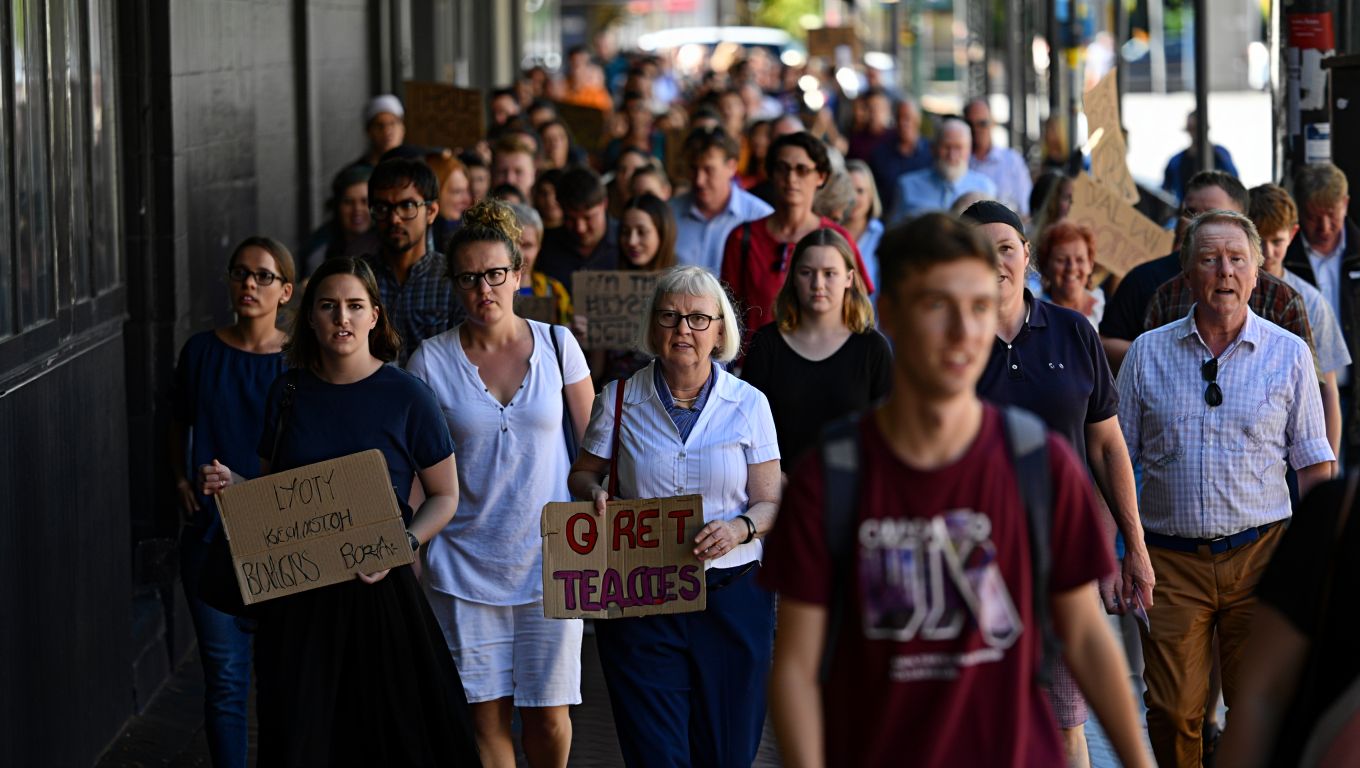
Classrooms across Queensland fell unusually quiet as thousands of educators left their posts in a coordinated walkout over spiraling class sizes and strained learning conditions. Parents scrambled for last-minute care, students faced disrupted routines, and a long-simmering debate over how many children should be in a single room was pushed into urgent focus.
Teachers say the strike isn’t about pay or perks, but about the core promise of public education: the ability to give each child real attention. “You can’t differentiate for 30-plus learners and still keep everyone safe,” said one Brisbane secondary teacher. “We’re not asking for luxury; we’re asking for what works.”
What sparked the walkout
Union delegates point to expanding enrollments, patchy relief coverage, and uneven enforcement of recommended caps as drivers of unsustainable crowding. In some schools, teachers report classes edging into the thirties, with specialist rooms ill-suited to that load.
“Last week I had 33 Year 7s in a room built for 24,” said a Townsville educator, describing a juggling act of behavior, assessment, and welfare. “You triage the urgent and hope the quiet kids aren’t slipping.”
Leaders argue that large classes compound other pressures: more admin, more diverse needs, and less time for actual teaching. “Class size is the lever that moves everything,” a union spokesperson said. “Smaller groups mean safer rooms, better feedback, and stronger outcomes.”
The government’s stance
State officials say they recognize the strain but urge a return to class while talks continue. The Education Minister described smaller classes as a “shared goal,” citing recruitment programs, new classrooms, and targeted support for over-cap schools.
“We’re investing in facilities and fast-tracking hires,” a spokesperson said, adding that any binding cap must be both “educationally sound and operationally realistic.” The government has signaled willingness to pilot stricter caps in selected regions, with additional aides and relief teachers to stabilize coverage.
The human toll in crowded rooms
Beyond metrics, teachers describe the daily strain of teaching too many students at once. With larger classes, transitions take longer, feedback shrinks, and low-level disruption erodes learning minutes. Early-career educators report higher burnout, while experienced staff feel they are “spinning plates” rather than crafting lessons.
For students, the impact is often invisible until it isn’t: missed check-ins, delayed marking, and fewer chances to ask the small question that unlocks understanding. “You see bright kids going quiet,” said a Gold Coast primary teacher. “They wait, you’re busy, the moment passes.”
What teachers are asking for
Union delegates say they want enforceable, transparent caps, not aspirational targets. They’re also seeking staffing fixes that stick when the relief pool runs dry and when enrollment spikes hit certain corridors.
Key proposals include:
- Enforceable class-size limits with funded compliance plans and public reporting
- Guaranteed in-class support for composite or high-needs groups
- A statewide relief-teacher pool to backfill absences quickly and fairly
- Recruitment and retention incentives for hard-to-staff subjects and regions
- Extra non-contact time to plan, assess, and provide individual feedback
“These are practical, costed steps,” a union official said. “They move us from firefighting to foundation-building.”
Parents caught in the middle
Families expressed a mix of empathy and frustration. Some support the action as a necessary shock to a system that has normalized overcrowded rooms. Others worry about lost learning and the difficulty of arranging care at short notice.
“I back the teachers, but I need notice,” said a parent in Cairns. “My son’s class has 31 kids—he struggles to get help. I want the strike to mean something, not just another day missed.”
Community groups warn that repeated disruptions can deepen inequities, with vulnerable students most likely to miss critical support. Teachers counter that the larger inequity is leaving those same students in oversized classes with dwindling adult attention.
What the data can’t ignore
Education researchers broadly link smaller classes, especially in early years and high-needs contexts, to better outcomes—not just test scores, but engagement and long-term attainment. The effect depends on sustained reductions and skilled teaching, but the direction is consistently positive.
Queensland’s demographic pressures are real: fast-growing suburbs, teacher shortages in key subjects, and construction timelines that lag behind enrollment curves. Without enforceable caps, teachers fear that “temporary stretches” become permanent norms.
The path to resolution
Both sides signal room for movement. Union leaders say job action will pause if binding negotiations deliver measurable relief this term. The government favors a staged rollout, pairing caps with hiring, facilities, and targeted funding.
An independent umpire may be asked to shape interim benchmarks, with periodic public updates to track compliance. “Kids need stability, teachers need tools, and parents need a clear timeline,” said a mediator familiar with similar disputes in other states.
For now, schoolyards tell the story: fewer teachers on duty, fuller queues at pick-up, and a public conversation finally centered on how many students a single teacher can be expected to carry—and what it takes to make that number work.