
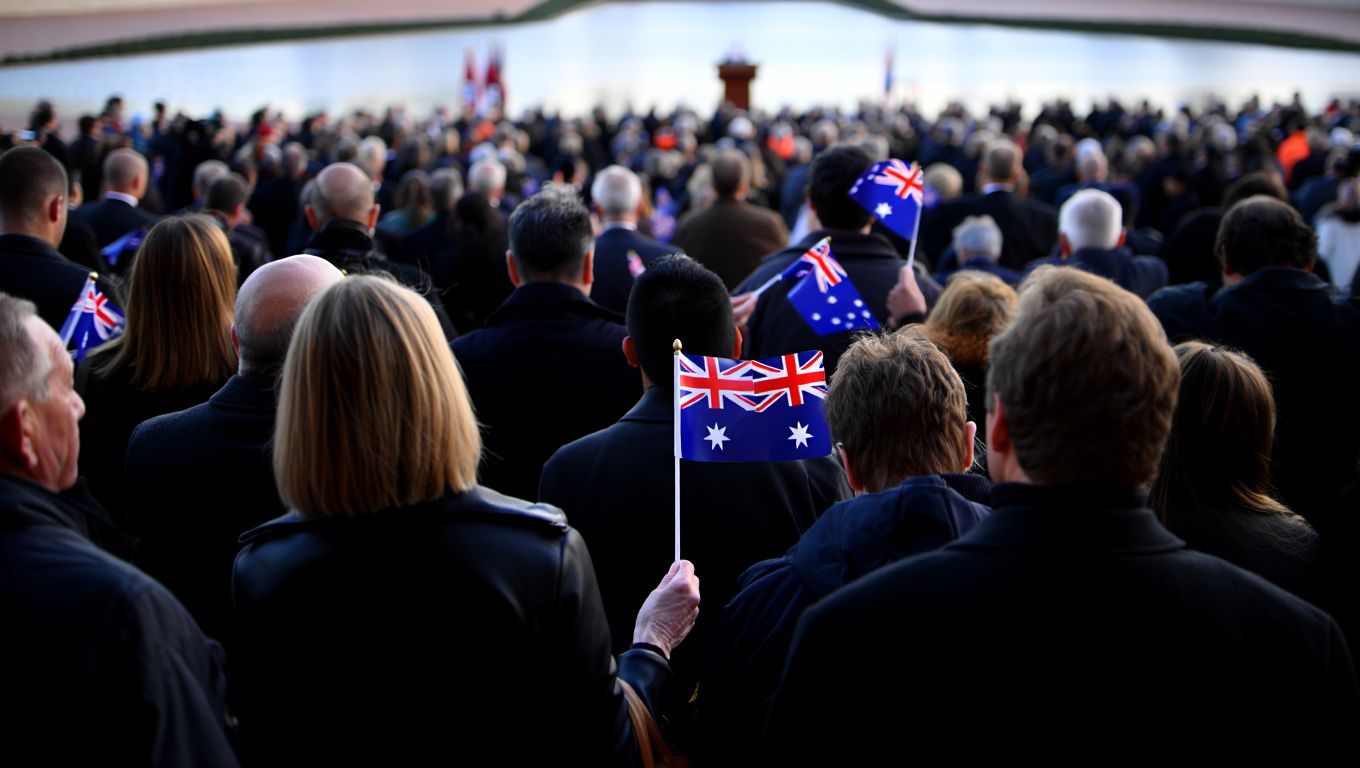
Before dawn breaks over the capital, the silence feels almost tangible. A chill sits on the lawns, and breath hangs white in the air as people shuffle into place, drawn by memory and duty. Candles flicker like small beacons, cupped in careful hands, while the long façade of the War Memorial looms quiet and solemn. Even before the bugle, there is a sense of presence—of something both ancient and immediate, carried in the soft murmur of thousands.
Before first light
They arrive in waves: families with children, veterans with service medals, workers in high-vis, students with scarves pulled tight. Sprigs of rosemary and red poppies change hands, pinned to jackets with a gentle touch. The crush is orderly but thick, a turnout not seen in years, spreading back along the avenues and into the trees.
A simple Acknowledgement of Country opens the gathering, naming the Traditional Owners and the ground on which we stand. In this pre-dawn hush, the words feel anchored, as if they knit past and present more firmly than any flag could.
The ceremony unfolds
When the bugle’s first note cuts the dark, thousands lift their chins almost in unison. The Last Post carries clean and high, and then the quiet returns—complete, profound, and shared. You could hear a coat sleeve brush, the shallow breath of a child, a single distant bird.
A chaplain’s brief prayer and the Ode of Remembrance follow, the crowd answering with a soft “We will remember them.” Two national anthems rise—steady, respectful, familiar—and wreaths are laid with a measured grace that feels both public and deeply personal.
- Key moments included the Last Post and minute of silence, the Ode, the laying of wreaths, and the singing of both national anthems, each met with stillness and steady applause.
Light creeps across the horizon, catching the edges of berets and the polished shine of medals that tell whole stories in a few worn ribbons. A breeze lifts the large flags, and a murmur returns, careful at first, then building like a soft tide.
Voices from the crowd
“I come for the mates I left behind and the ones I found when I came home,” says a veteran in his seventies, hat brim pulled low. “Every year it feels heavier, and somehow lighter too.”
A young cadet stands very still, cheeks pink from the cold. “It’s about learning our history by heart,” she says, voice barely above a whisper. “You feel the weight, but also the hope.”
Nearby, a visitor from Aotearoa wraps a scarf more tightly and nods toward the crowd. “We share these stories across the sea,” he says. “It’s a bond you don’t need words to explain.”
A living tradition
The turnout speaks of continuity after years of disruption, and of a hunger for connection in unsettled times. Many note that conflict abroad sharpens the focus at home, bringing new faces to ceremonies often viewed as ritual rather than encounter. The younger cohort is conspicuous: teenagers with phones silenced, toddlers cuddled under blankets, and twenty-somethings who came straight from night shifts.
Organisers point to simple truths about remembrance: people crave ritual, community gives shape to grief, and dawn services offer meaning without heavy ornament. The program remains spare by design—bugle, ode, wreaths, silence—and that economy feels right when the names and stories stretch beyond easy telling.
Moments that travel
For many, it’s the sound that lingers—the bugle’s clear thread, the anthems’ shared cadence, the rustle that returns after a minute that seems to stretch forever. For others, it’s touch: the rough stem of rosemary, the cool metal of a medal pressed against a palm, the brief squeeze of a stranger’s hand.
“I bring my kids because I want them to see how a community holds its memories,” says a woman with a navy coat, two small hands tucked in her own. “Not just the glory, but the cost we keep counting.”
Beyond the dawn
As the sun finally edges over the hills, the crowd peels away toward warm breakfasts, to the veteran’s march, to church services, or simply to sit in quiet kitchens and call an old friend. The day is long, but the tone is set; the first light gives a particular clarity that most of us spend the rest of the day chasing.
Along Anzac Parade, the footsteps will soon measure history in a different rhythm, brass bands will lift the air, and families will wave at faces they don’t entirely know but somehow recognise. The meaning is layered, changing with each year, each person’s story, each new name etched into the collective ledger.
What remains, as the morning warms and the city returns to its ordinary hum, is that shared moment before sunrise, when thousands chose to stand together and listen—truly listen—for the notes that tie past to present, and the quiet that lets the memory do its enduring work.