
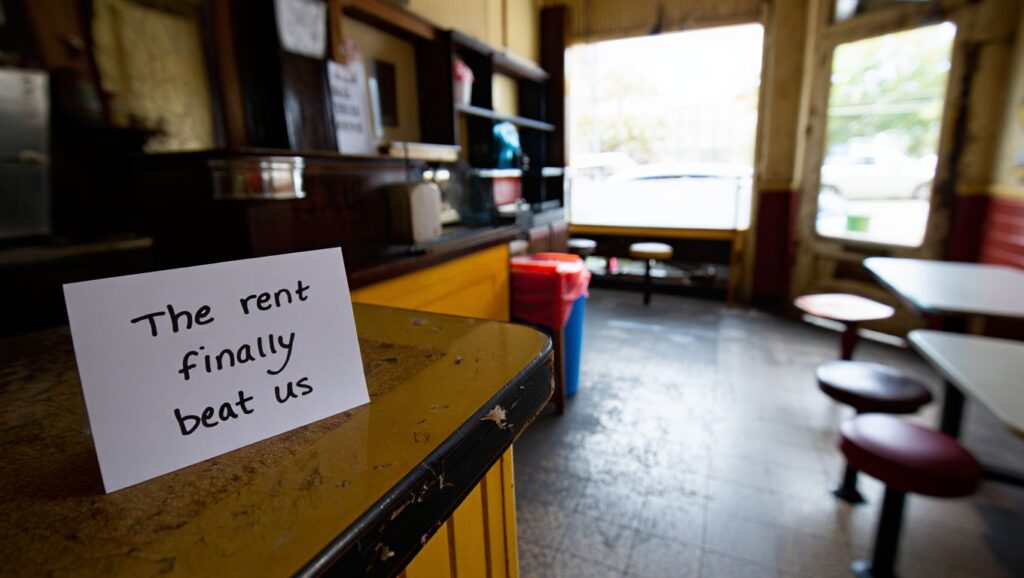
The line started forming before sunrise, a ribbon of regulars clutching keep cups and sharing old stories. After 55 years in the same sun-faded corner of inner Melbourne, a beloved milk bar switched its lights off for the last time. The door chime still worked, the lolly jars still caught the light, and behind the counter a family did their best not to cry in front of customers.
They had survived recess rushes, the arrival of supermarkets, and the slow drift of gentrification. But the latest lease came with a number too steep for a place that sells milk, bread, and memory. As one of the owners put it quietly, “In the end, the rent won.”
A room full of ordinary magic
For decades the shop felt like a shortcut through the neighborhood’s daily life. Footy cards. Five-cent mixed lollies. Newspapers stacked beside the milk fridge. A chipped blender doing its best against banana and Milo. You could arrive with nothing more than loose change and walk out with a small, certain happiness.
Parents taught kids to count coins at the counter. Teenagers traded gossip over icy poles. An elderly neighbor got her newspaper held aside, no charge if she forgot her purse. “It wasn’t just a shop,” said Jesse, who grew up three streets over. “It felt like a public living room.”
When a neighborhood gets expensive
In the 1970s, the rent fit inside a family budget. Today, inner Melbourne’s commercial leases feel like a different language. For a high-turnover bar or boutique, the new numbers might make sense. For a corner milk bar that sells school snacks and scratchies, they don’t.
“It’s not that people stopped coming,” said co-owner Mina, stacking the final bundles of bread. “We’ve never had more friendly faces. But good will doesn’t pay the gap between what a small shop can earn and what a landlord wants.”
Some weeks, they shaved costs to the bone. Single deliveries instead of two. Simpler sandwiches. No more late-night hours. “We did everything except raise prices past what felt fair,” said Tony, “and then we still would have needed a miracle and a new calculator.”
What locals say they’ll miss
- The quiet safety net of a place that would spot you a loaf of bread and trust you to pay it back tomorrow.
- The feeling that someone knew your name, your order, and your kid’s allergy without needing an app.
- The everyday ritual: push the door, ding, smile, a quick chat that made the morning feel complete.
On the last day, everything was a souvenir
By midday the Post-It notes began to appear along the fridge and on the faded candy shelf. “Thank you.” “You were our first stop after school.” “You made this street feel like a village.” People asked to buy the old sign, the chalkboard, the coin tray that had lived by the till. Someone offered to crowd-fund the difference, but the lease clock had already run down.
A teacher came with a class drawing of the shop. A tradie dropped off meat pies “for the crew.” A former local, back for the day, lingered beside the freezer with a lemon Splice, taking a last long look. “You don’t know you’re collecting memories while they’re happening,” he said. “Then one day they’re all you have.”
The economics of small kindness
Corner stores are built on tiny margins and human habits. They trade convenience for loyalty, and loyalty for stability. When costs outpace cups of coffee and packets of chips, the arithmetic gets cruel. A single missed delivery can spoil the week. A power bill can swallow a month of jelly beans.
Policy debates swirl—about rates, leases, and the shape of streets—but in the aisle the outcomes feel very personal. “We’re not a statistic,” Mina said with a tired smile. “We’re the place where your kid bought their first independent snack.”
What remains after the lights go out
Not everything leaves with the last key. The habits remain: waving at a neighbor, paying it forward, asking how the morning’s been and meaning it. Milk bars taught a certain civic muscle, a way of standing within five square meters and recognizing other lives.
On closing night, the final EFTPOS beep echoed off the tiles. The family posed for one more photo behind the counter, then started the slow work of packing up. The bell chimed once more, soft and oddly hopeful. “We’ll still be around,” Tony said, locking the door. “Different corner, same care.”
And the street—richer for what it had, poorer for what it lost—exhaled. The window’s hand-painted letters reflected a sky smudged pink, and a passerby paused, reading notes taped where the newspapers once sat. She pressed a palm to the glass, whispered “thank you,” and continued down a block that suddenly felt a little less busy, a little more in need of a place that sold not just milk and bread, but small, everyday belonging.