
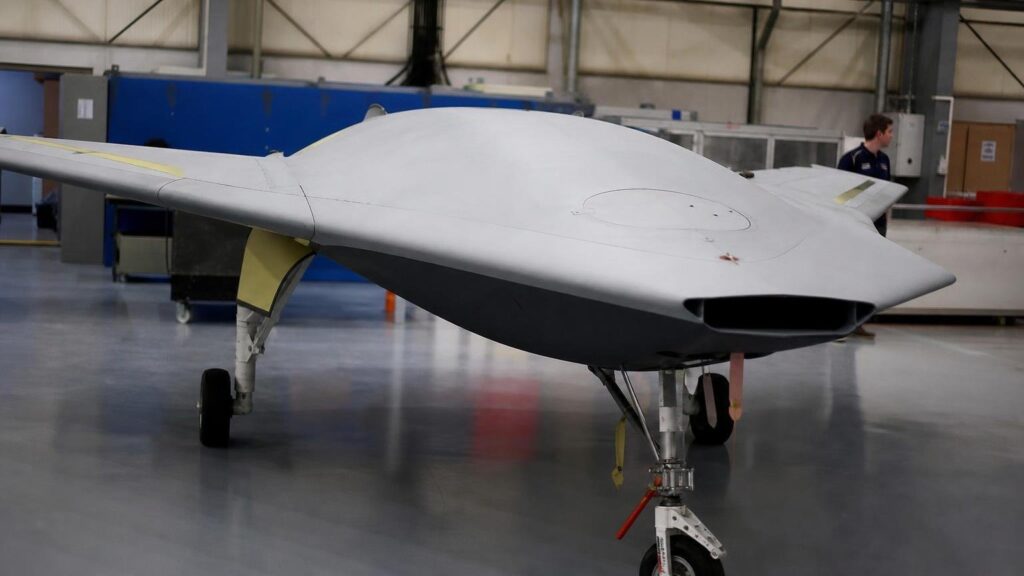
An aircraft built for combat without a cockpit forces a reset in how we think about airpower. It signals a shift from protecting a human-in-seat to protecting a network, from exquisite platforms to adaptable teams, and from linear command to collaborative autonomy. In Australia, that shift has arrived with a strikingly pragmatic machine that pairs local ingenuity with global ambition.
From project to symbol of sovereignty
Australia’s new uncrewed fighter—developed by Boeing Australia in close partnership with the Royal Australian Air Force—has become a condensed statement of national capability. It’s widely described as the first locally designed and built combat aircraft in more than half a century, turning a long-held aspiration for industrial sovereignty into a flying reality.
The program is known as the MQ‑28A “Ghost Bat,” and it blends familiar aerospace rigor with fast, software-driven evolution. Each successful flight test feels like a page turning: “Build fast, test fast, learn fast” isn’t a slogan so much as an operating principle.
Why remove the cockpit?
Removing the cockpit removes the most fragile, complex, and limiting subsystem aboard a combat aircraft: the pilot. No canopy means more space for fuel or payload, improved stealth, and fewer design trade‑offs around life‑support and crash survivability. Most importantly, it moves risk away from the aircrew and towards resilient systems and tactics.
The result is a platform designed to be cost‑effective, attritable, and decisively useful in high‑threat environments where sending a human‑crewed jet would be a gamble. In plain terms: “Keep the pilot out of the missile envelope” becomes a design north‑star.
How the “loyal wingman” concept works
Rather than replace crewed fighters, the aircraft is built to team with them. A human leads the formation, while the uncrewed partner executes tasks like screening, sensing, feinting, or striking decoys and defended targets. The human stays “on the loop,” issuing intent, and the machine handles the details at machine speed.
That teaming model compounds effectiveness: one pilot can command multiple assets, extend sensor reach, and create dilemmas that saturate an adversary’s decision‑cycle. Think of it as air combat’s distributed era—fewer single points of failure, more overlapping options.
A modular machine
At the heart of the design is a modular architecture, anchored by a reconfigurable nose section that can swap quickly between mission packages. Today, that means high‑end sensors, electronic warfare tools, or communications gateways; tomorrow, it could include novel payloads as software and hardware mature.
This approach treats the jet as a chassis for rapid capability insertion, more like a smartphone ecosystem than a sealed, once‑per‑decade upgrade. “Fly cheap, fly often, learn every sortie” sums up the development ethos.
Built in Australia, for Australia—and beyond
The program has mobilized an Australian supply‑chain of primes, startups, and specialized SMEs, from composites and avionics to autonomy software and flight‑test services. It’s not just about a single airframe; it’s about building a workforce and a repeatable national playbook for advanced aerospace manufacture.
There’s clear export potential, too: partners seeking affordable mass, interoperability with allied fleets, and pathways to local participation. The appeal is strategic as much as technical—sovereign control of code, data, and sustainment.
Ethics, safety, and the human in the loop
As autonomy advances, guardrails must be clear. Current concepts keep humans in command, with constraints on target selection, rules‑of‑engagement compliance, and transparent audit trails. The priority is “trustworthy autonomy,” not brittle black‑box magic.
Safety follows a layered logic: geo‑fencing, health‑monitoring, fail‑safe modes, and robust testing before fielding. The technology has to be not just capable but also governable.
What changes in the battlespace
In practical terms, this new class of aircraft reshapes tactics and tempo:
- More sensors forward, more survivability at the edge, and more options for the commander—without risking a pilot each time.
By multiplying presence and complicating enemy targeting, uncrewed teammates create a mesh of effects rather than a single, linear strike. That favors agility, deception, and continuous pressure.
Testing, iteration, and what to watch
Expect steady increments rather than headline‑grabbing leaps. Look for expanded swarming behaviors, tighter F‑35 and Super Hornet integration, and maturing electronic warfare and data‑fusion stacks. Each update will be equal parts software and tactics, reflecting the “systems‑of‑systems” mindset.
The bigger story is about credibility: Australia setting a precedent for allies who want to pair industrial resilience with front‑line capability. In an era where mass, modularity, and rapid iteration define air power, a cockpit‑free combat jet is less a novelty than a harbinger of how air forces will fight—and how they’ll build.